Search This Blog

Showing posts with label Western. Show all posts

Tuesday, April 21, 2020

Film Essay: The Real Climax in "Shane"

WARNING: THERE WILL BE SPOILERS!

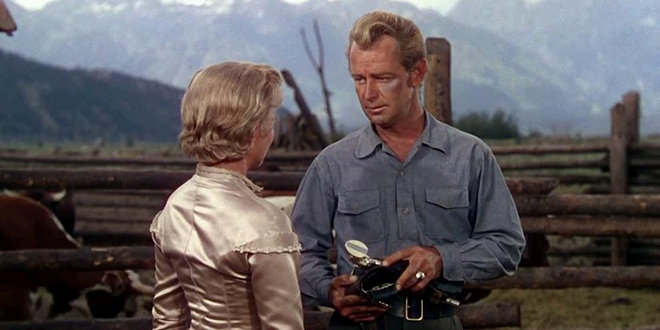
It comes off as to no surprise that when western fans think of the climax in "Shane," they referred to the scene in the saloon when Shane kills the villains. They're not wrong. It is the last action scene in the movie involving Shane taking out the pack of villains who have been threatening him and the people around him for the whole film. It's the scene that all audiences have been waiting for since we met these criminals anxiously hoping for Shane to give them a taste of their own medicine. Though the villains are the foil to the plot, their involvement is not the real focus of the movie. Judging by how the film plays out, it is no surprise that Shane will effortlessly kill the villains since he is built-up to be one of the greatest gunslingers in the west. We haven't seen him duel with criminals until this point, which would be anti-climatic if he didn't succeed. Most of the film focuses on the relationships between Shane and the rancher Joe Starrett along with his family, based on how they perceive him. A little before Shane entertains the saloon, we get a fistfight between Shane and Joe. A scene that's heartbreaking yet exciting, and looks and feels way more dramatic and intense than the actual duel at the end of the film. What I'm about to say may sound strange and unpopular, but the final fight between Joe and Shane acts as the film's real climax than the scene that follows.


Before their fight, Shane is allowed to work on Joe's farm, giving him the chance to hang up his guns for good to start a new after spending so many years killing, shooting, and drifting. Unfortunately, Shane has trouble escaping from his past due to a gang of outlaws including notorious gunslinger Jack Wilson hired by cattle Baron Rufus Ryker, who plans to force people off the land so he can claim what he believes his. Shane has stayed in his farmhand clothes as a means to adapt to his new surroundings and cover up his old identity. When the stakes become higher than they ever were before between Joe and Ryker's posse, Shane approaches Joe wearing the original buck-skinned clothing that he left behind when he started working. This difference in costumes uses Iconography to reinforces the duality of Shane's character. Shane wearing the clothes he wore when he first rode to the farm, expresses that he can't run away from his past. He'll always be a gunslinger at heart, making this sudden change of wardrobe significant to Shane accepting who he is.


Two conflicting themes used in many western are seen before and during the fight. The first being the Effete vs. the Virile. The effete is Joe, who is weak by fighting fair, and the virile is, of course, Shane, who is smarter and more vicious than his rival. Joe feels envious to be as tough as Shane is. He's able to fight and find ways to keep him and the other homesteaders secure during Ryker's raid of terror, but he does not possess the knowledge and skills of the gunslinger working with Ryker. When being invited to have a meeting with Ryker, Joe plans to have him killed, knowing that Ryker will still cause harm. Joe's wife Marion acknowledges that he will die trying, but Joe would rather die a hero as opposed to living his life as a coward. Shane agrees that Joe's mission will be suicidal, acknowledging that the homesteaders' efforts will go in vain without Joe's help. To keep him alive, knowing that words will not change his mind, he challenges him to a fistfight.


Domestic Implements VS. Guns become the second conflicting theme that's visually expressed during the fight. The fight is set within the confines of Joe's farm as Joe fights Shane with the determination to defend his home his way. What Joe is refusing to realize is that the domestic beings on his farm are fearful of the uncertainty of the domestic order. We watch frightened animals trying to flee the scene and watch Marion cry in terror. The fight itself is viewed from a domesticated frame as well, like through a window, or underneath a wagon. The use of animals and objects around the two provide meaning to their relationship and struggle during this scene. The startled animals act just as violently wild as both characters are. The tree stump that they pulled out together subtly reminded us of a time when they were both allies that are now long gone. And the low angle shot of the fight shown through farm carriage, and between horses' hooves show Shane's life transitioning back to the way it used to be. This is where guns come into play because now that Shane has fully evolved back to an outlaw, he does what Ryker would have done to Joe. He uses his dishonest tactics as a gunslinger to win the fight by overpowering Joe's fists with the butt of his pistol.


For the majority of the fight, we're watching it from the perspective of Joe's son, little Joey. If dealing with Ryker and his men isn't enough to pull Shane back to his roots, in comfort among Joe's family, he still can't forget his past for how Joey idolizes him for his outlaw stature, promoting him to partake in violence and gunslinging. This relationship creates a bit of tension between Shane and Joey's parents. As Marion fears how his outlaw nature is influencing her son, Joe feels his son will not look at him as noble when compared to Shane. While Joey witnesses the two duking it out, he finds himself still struggling with which side he's on, unaware of the reasons why they are fighting. Little Joey is at first repulsed by Shane using his gun to win the fight, taking his Father's side. After being told by his mother why he did what he did a few moments after Shane leaves, Joey forgives Shane and chases him as he rides off to kill Ryker's posse in the saloon. Shortly after the battle, Shane says goodbye to little Joey, telling him to protect his family. Like a traditional western involving an outlaw protagonist, Shane rides away since he has no place to settle down in life. No matter how many times little Joey calls for Shane to "come back" he keeps riding on knowing that he has no place living a domestic life.

This scene is more than just Shane getting into a fight with Joe; this is the point where everything tragically changes for the better despite the characters not wanting things to turn out how they are. We are sad to see Shane leave the farm and revert to his old self, but we know he's the only man who can save Joe and society from Ryker. It's unfortunate to see two allies now turn against each other, yet Shane's actions are justified. As we sit there questioning how this fight is going to end (though its clear Shane will kill Ryker and Wilson one way or the other), we wonder what will become of the family's domestic environment. Moreover, we query how this fight will affect their relationship with Little Joey. There's nothing at all wrong with the action taking place after, it's an awesome scene too. Factually, the gunfight does serve as the film's final resolution. But seeing how much time we've spent watching Shane try distancing from his past, as his presence affects the family he's with, this whole scene is the most significant part of the story of how we see these relationships wrap-up for the greater good. Shane may not leave the picture just yet, but it doesn't mean that the character arcs aren't complete, all while containing thrill, excitement, and tragedy, all shown in one scene filmed at a grand-scale level.

Sunday, June 9, 2019

FILM ESSAY: DJANGO UNCHAINED: A MODERN EXAMPLE OF A REVISIONIST WESTERN

Ever since the early days of cinema westerns have been a huge staple to the medium. The reasons why these films were so popular was mainly for its sense of adventure by containing a hero who doesn't fear death, action-packed shoot-outs, high thrills, a variety of different locations during the journey, and a romance. Throughout the years there have been all kinds of westerns, whether they would be long Epics, Spaghetti Westerns, Neo-Western (westerns taking place in modern times), and satire. But a famous type of western that would appear within these sub-genres are the Revisionist Westerns. A Revisionist Western are the kind of films that didn't follow the traditional tropes that most westerns were known for. Though there were a few Revisionist Westerns made during the time when Hollywood usually stayed with the traditional formula (The Ox-Bow Incident), the genre didn't launch until the 50s with films like "Broken Arrow" and “The Searchers”. From that point-on films like "The Dollars Trilogy", "The Wild Bunch", "The Outlaw Josey Wales", "Butch Cassidy and the Sundance Kid" and the remake of "True Grit" became some of the popular Revisionist Westerns for being big game changers to the formula by taking the genre to places that it would never usually visit.

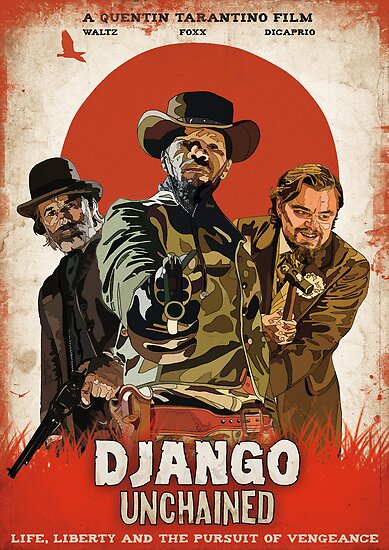
 A great example of a modern Revisionist Western, can be found in Quentin Tarantino's first western film...

Image result for Django unchained poster

Tarantino has had a fascinating film career by making films that made tons of callbacks to classic films but were still miles away from feeling like carbon copies of the films and genres he's paying homage to. This was because of the style he brought to the film's that he made by containing long casual conversations that would at times have little connection to the story ("Reservoir Dogs" and "Pulp Fiction" for example); constant use of foul language and racial slurs; stories that were non-linear; dark humor; and extreme violence. And yet underneath all this madness were compelling characters that were relatable despite their horrible deeds, powerful morals, and enough elements left for interpretation for audiences to revisit his films to come up with interesting conclusions. He would successfully entertain and shock his audiences with his insanity while still giving them something familiar and food for thought. So, it would seem natural that Tarantino (who is always a big fan of westerns, particularly the ones made from Sergio Leone) would be the perfect director to make a Revisionist Western, and he successfully does so.

Related image

What's common in many westerns is that the setting would usually take place on the plains, or an old town surrounded by a desert landscape. The film does at one point go to a wild western town, but for most of the film, we're taken to a place that many westerns would dare not go which is a plantation full of slaves. That's not to say that westerns didn't show this location, it's just usually the abuse and racism that went on there were hardly ever shown. It would seem at times that slaves were happy serving their master as they cheerfully worked and sang in the cotton-fields. There were very few westerns containing adventure and action that would show the cruelty that went on during slavery at that time. Tarantino doesn't just show the slaves looking miserable as they work and sweat under the blazing hot sun but goes as far to show the physical abuse they suffered. You see them getting tortured, endlessly insulted through the use of the infamous N-word, and killed in the most awful ways imaginable. For a plantation under the title of "Candyland" that would've been appropriate for a plantation in a film downplaying racism like Disney's "Song of the South", this isn't far from sweet or so much as being bitter, its downright poisonous.

Related image

Seeing how the film doesn't take slavery lightly (of course, what would you expect from a mad genius like Tarantino), the film does what plenty of Revisionist Westerns are known for doing which is giving empowerment to groups who were usually oppressed. In many westerns, before this subgenre launched, Native Americans were portrayed as bloodthirsty savages who just killed for the sake of killing. In Revisionist Westerns like "Broken Arrow", "The Outlaw Josey Wales", and "Dances with Wolves" Native Americans were given a more positive approach by being portrayed as a sympathetic race of people who lost their land and way of life because of the white man invading their territory. Tarantino does this by giving empowerment to the slaves who we feel complete pain and sorrow for every single step of the way from witnessing their mistreatment. The best part is we don't get a white character as the film's primary hero who's against slavery, but instead a former slave named Django (Jamie Foxx) who's given a badass approach as he gruesomely slaughters the people who control the plantation, something you don't see in many westerns. It's not often that you see an African American star as a cowboy. Of course, not all white people in the film are portrayed as heartless racists, the person who frees Django is bounty hunter Dr. King Schultz (Christoph Waltz) who hates slavery and gets Django his start in the bounty hunting business as he aids him to search for his wife. In his first scene, he demonstrates his unhappiness with slavery by freeing the other slaves after killing one of their captors while leaving the other severely injured so the slaves can take their revenge. But there's a flip-side to the coin because not all slaves are innocent either. Sometimes slaves can be so loyal to their master that they themselves become just as ruthless which is evidenced through Samuel L Jackson's character Stephen who serves the film's main antagonist Calvin Candie (Leonardo DiCaprio). That's another element that's hard to find in westerns or so much in films focusing on slavery, usually the slaves are just victims (as they should be portrayed) when they're not seen as happy servants.

Image result for Django unchained Django

A popular trope shown in Revisionist Westerns is how the heroes weren't as perfectly charming and law-abiding as most heroes in a traditional western were. Many of them (especially Clint Eastwood) were cold, selfish, and worked outside the law. Half of the time they would do criminal acts for personal gain, other times it would be for justice that the law couldn’t provide. Schultz is the kind of bounty hunter that Eastwood would play from "The Dollars Trilogy" if he was required to be sophisticated. He fights against criminals and is heavily against slavery, but he is a savage killer who does it for the money and sport, showing no remorse over having a man murdered in front of his own son. His gun is his tool to kill criminals, as his knowledge is to scam people to achieve his desires. Django himself though is a character we pity for due to his horrible life as a slave, and root for during his quest to rescue his wife as he kills slave owners, isn't the idea of a perfect hero either. He inherits Schultz’s rules and skills of being a bounty hunter doing the same unlawful acts as he does. At one point in the film, as Django disguises himself as a slaver, he goes the extra mile by being harshly cruel to the slaves without hesitation despite after suffering so many years of abuse. This behavior disgusts Schultz since he wouldn’t dare act exactly like the people he despises.

The art of film always changes through the passage of time, no matter how popular a story formula or a genre is. If westerns kept going in the same direction as they did when they first began, they would be outdated and no longer seen as relevant for how average they are. We have plenty to thank regarding Revisionist Western films for having the ambition to change the rules by giving audiences something new and exciting instead of showing them something they've already seen before that has become commonplace. Tarantino's involvement in the sub-genre is without a doubt a match made in heaven, who successfully gave audiences a western that has disturbed and thrilled them through its extreme portrayal of slavery and would continue to amaze audiences in his following western film "The Hateful Eight".

Saturday, April 27, 2019

FILM ESSAY: THE LAW VS. THE OUTLAW


Last year I reviewed two of the most iconic westerns of all time that still stand the test of time, which were "The Searchers" starring John Wayne, and "The Good, The Bad and The Ugly" starring Clint Eastwood. After re-watching the film that gained John Wayne his Oscar "True Grit", and an Eastwood film that I've been dying to see since Middle School "The Outlaw Josey Wales", instead of reviewing them separately (though I eventually plan to in the future), I'm deciding to compare and contrast them. The reason why I've chosen these two films for such a comparison, as opposed to the two classics I've already reviewed, was for two reasons. The first being how these two completely different types of cowboys share together in terms of traits and personalities. And the other reason is the theme that both films are centered on which is revenge.

WARNING: THERE WILL BE SPOILERS!

Related image

Interesting enough, though John Wayne has top billing in the film, his character Rooster Cogburn isn't the focus. The actual main character is a 14-year-old girl named Mattie Ross (Kim Darby), who is one of the strongest female characters to have ever existed in a western (at least until the third act). Regardless of how many times people dismiss and bully her because of her gender and age, she always finds a way to push-passed it. When Rooster and his partner La Boeuf (Glen Campbell) try to ditch her, she catches up with them. If she has trouble bargaining with a person, she won't stop arguing until she gets what she wants. She's headstrong of having things her way because she wants revenge on the man who killed her father, Tom Chaney (Jeff Corey). Though her on-screen relationship with her Father is shown very brief, her love for him is felt throughout her journey for how determined she is to find Chaney and bring him to the town where she killed her Father to be hanged as opposed to flat-out murdering him.

Related image

Josey Wales' seek for vengeance shares a similar loss that Mattie went through. Before becoming the kind of outlaw that people would expect Eastwood to behave, he was a humble and civilized farmer living happily with his wife and kid without a care in the world. Until one horrible day, an army of pro-Union Jayhawker militants arrives at his farm taking away everything he had. Instead of losing one person he loves, he loses his whole entire family and his farm from these war-crimes as he's left for dead. Wounded, alone, and with nothing left for him to live on, the only thing that Josey can do now is take revenge on the Union Jayhawkers and the man who led the attack Captain Terrill (Bill McKinney) for what they did to him, his family, and his way of life. Much like how Mattie's relationship with her Father is played-out, Josey screen-time with his family is short but is still felt not only through his actions and thirst for blood but through every moment of the scene itself without feeling rushed or too romanticized. Mattie's motive for revenge is effective, but it's definitely Josey's motive that feels grimmer and felt more by comparison.

Image result for Mattie True Grit 1969

As Mattie and Josey seek revenge over the loss of family, both being inexperienced with guns and finding criminals, they don't go alone, they get help. Josey joins a group of pro-Confederate Missouri Bushwhackers after teaching himself how to fire a gun, while Mattie hires aging U.S. Marshal Rooster Cogburn who is known for having "True Grit". Mattie may be the main character of "True Grit" and tough for fighting to get what she desires, but when it comes to partaking in action and coming up with strategies at capturing her enemy, she gets put aside for the star that people came to see shoot-up the screen, John Wayne. Mattie does shoot the man she's after, but he still lives and gets taken out by Rooster as she's trapped in a snake pit. So in terms of comparing methods and personality for how the characters take action during the search, I'll be focusing on Rooster when covering "True Grit".

Related image

Unlike Josey Wales, Rooster doesn't have any personal vendetta against the person he's tracking down, all he cares about is the money he receives from it because that's his profession. To Rooster, he finds hunting criminals and bringing them back dead or alive to be more of a profitable sport for him, than wanting to serve justice for the common good. If anything Rooster just uses his position of authority just to strike fear into the criminals he's paid to find, feeling that he can do whatever he wants to them as long as the people who pay him see it justifiable. He knows his way around the places he explores to find the person he's after very well, and how the criminals he seeks thinks, which gives him the advantage to take on his opponents when they least expect it. And when he takes his fight to those who challenge him or refuse to obey his commands, he shows no mercy or hesitation when killing them or keeping them in-line. Before being a Marshall, Rooster in the past hasn't been so different from the criminals he catches. During the Civil War, he's taken part in war crimes with Captain Quantrell and revealed to have robbed a federal paymaster after the war, who doesn't consider these illegal acts he's partaken in to be crimes. Above all, despite Rooster being played by John Wayne, the iconic charismatic American hero who we know will do right in the end regardless of his faults, Rooster is shown to be rude, patronizing, and aggressive, who constantly drinks and is very trigger happy. However, (as many would expect from Wayne playing a cowboy) he can be gentle and protective towards Mattie, almost acting like a second Father figure to her. His ways of handling Mattie can be a little too rough and cold, but only because he doesn't want her to get hurt. The relationship shows that underneath Rooster's savage and self-righteous ways is a lonely man who has no real friends or a person to care for, where the only thing that keeps him going in life is killing people for the thrill and making money to drink his pain away. 

Related image

Rooster may be flawed, but most of the people he goes after are people who are deserving of their crimes. Josey goes after people of authority who in the justice system are considered to be good guys. After years of killing Union soldiers during the Civil War, when the Union wins, the Confederates are forced to surrender, and Wales still holding a great hatred for the Union Redlegs refuses to bow down to them. His resistance becomes a lucky break for him after discovering that the Union is not only bullying the band of guerrillas he's been fighting with by forcing them to forget their beliefs but has them massacred even though the war is over. And the Captain (John Vernon) who Josey has served faithfully during the war is now slaved by the Union to take out rebels that oppose them, including Wales. The war may be officially over, but for Wales, it will continue as long as he's around and the Union Captain who killed his family is still alive and well. Josey will slaughter every Union Redleg that comes in his path, even with the knowledge that he can't single-handily slaughter them all. But he doesn't care, because just like the protagonists in "True Grit" the only things that keep him moving in life is revenge and violence which makes him become a wanted man. The greatest element to Josey's character is Clint Eastwood's performance because he's nowhere near as predictable as John Wayne is. Eastwood always had a dry and emotionless approach, who seemed like the kind of cowboy who will just do whatever he feels without caring about the consequences of his actions. Unlike how Wayne will shout, make bluffs, and give warnings when going after someone, Eastwood intimidates a person who dares to cross-him with his cold-stare and few threatening words spoken in such a gruff tone. At first, his intimidation backs away the person who is thinking about turning his gun on him, but should that man suddenly make eye contact with him again or look like he's about to pull out his pistol after being given a warning, he kills him in a wink of an eye. Just like Rooster, Josey is shown to be very calculating when coming up with strategies to attack his enemies, and is openly rude to people, except he'll mostly just spit in-front of the people he hates. Underneath his empty appearance, Josey on the inside is very caring and sentimental. He'll kill any Union Jayhawker soldier he finds but will stop his attack to rescue someone who is in need of his help. When about to ride off to face a large Comanche tribe, he leaves the people who he met on his journey who have become like family to him behind so they won't be harmed like his family. And instead of down-right killing the leader of the tribe, he sympathizes with them for their hate of the government stripping them away of everything away that they valued, and joins them as an ally, after how the government supported the people who took everything that meant to him.

Given John Wayne’s heroic reputation, and that his performance as Rooster came late in his career when everyone was already familiar with his characteristics, Eastwood as Josey Wales comes across as a more interesting character. Eastwood had already established his trademark as this kind of cowboy before in the “Dollars Trilogy”, which you can argue makes him almost as predictable as Wayne is at this point too. However, Eastwood's bruiting personality and savage approach makes him less expected when compared to Wayne because you don’t know when he’ll fire or when he’ll stop his plotting just to rescue an innocent bystander or make peace. With that said, despite their differences and one being more foreseen than the other, Wayne and Eastwood still perfectly fit the western genre, for their heroic image, tough personality, and having a soft heart underneath their cold personality. They are the true legends of westerns who will not be forgotten as long as the genre is still around.

Friday, January 18, 2019

CANNIBAL! THE MUSICAL

Image result for trey parker and matt stone

Trey Parker and Matt Stone are one of the most unique pairs in modern comedy. Their material is sick, raunchy, sadistic, grotesque, offensive, racist, mean, and juvenile to the point where you wonder about their mentality until you realize that underneath all their madness lies genius and wisdom. They use their extremely harsh and wild comedy to create an exaggerated outlook of our reality to tie into their clever commentary on controversial topics such as religion, politics, and racism, as well as trends whether it would involve celebrities, technology, and pop culture; than just using their humor as a cheap way to shock us and make us laugh (not to say that they don't occasionally do that). They're the kind of comedians who don't care what you think and are just going to express their views on current events and touchy subjects through their insane brand of comedy no matter what. It's their honesty and how they use comedy to help prove a point while also coming across as highly entertaining is what makes them such geniuses, which is why their works like "South Park", "The Book of Mormon" and "Team America: World Police" have been praised and celebrated.

Being curious to look back at the early stages of their career; after they made "The Spirit of Christmas: Jesus VS Frosty" that would later lead to a sequel and then a hit TV show, their next project was a live action dark musical comedy.

Image result for cannibal the musical

As Trey Parker was attending the University of Colorado at Boulder, he made a short trailer for his film class of a dark musical comedy of the infamous prospector of Colorado, Alferd Packer, who supposedly resorted to cannibalism when he and a few other men were snowbound in the high mountains. Though the trailer was a fake, the students were interested in seeing it as a full-length movie, so after raising a budget of $125,000, Trey and Matt began filming their independent project (while still in college) during the weekends with some of the students (as many of them were reported to have flunked their film class) and even some of the professors, as well as Trey's own Father (who plays the judge). The film was distributed from "Troma Entertainment" and changed the title from "Alferd Packer: The Musical" to "Cannibal! The Musical", because Packer isn't a well-known figure outside of the state of Colorado. And when the film was premiered to a theater close to the college, Trey and Matt had their friends organize a fake protest against the movie to help draw attention. The film is mainly considered to be Trey Parker's work since he wrote, directed, produced, and stared in the film, but Matt Stone who was uncredited did act and helped write and produce the movie.

When I first heard of the movie, I've only seen the trailer (unknown that it wasn't the real trailer) and saw 3 of the songs from the movie during my Middle School years, and it seemed like a movie that I would enjoy, only I didn't push myself to see it for its low-budget quality. However, now that I'm more familiar with Trey and Matt’s style of comedy, and have taken tons of enjoyment and awe from it, is their early project up there with the works that I have mentioned earlier? Enough (if not many) people feel that way due to the film gaining a bit of a cult following for being adapted to theater and the film getting a 12th anniversary two-disc DVD release, but it isn't widely known as "South Park" and "Book of Mormon". So in spite of its small cult following, is this an underrated treasure from two comedians at an early start in their career that deserves more attention; ON WITH THE REVIEW!

The film (as the title card suggests) is a perfect digital restoration of a lost musical film from 1954 that was upstaged by the classic "Oklahoma!". Taking place in 1883, Alfred Packer played by Trey Parker (who is credited as a play on Packer's alias when he was in hiding Juan Schwartz instead of John Schwartze) is on trial for eating 5 men up in the mountains, where it's most likely that he will be pleaded as guilty. Reporter Polly Pry (Toddy Walters) visits Packer in his jail cell who he claims to her that the events discussed in court happened very differently. Flashing back to 1873 in Bingham Canyon, Utah; a group of miners hears about the discoveries of gold in Breckenridge Colorado, as a few of them go out to find it after finding none in their current location, with Packer as their guide. But it appears that Packer is terrible a navigating, and seems more focused with tracking down his beautiful horse that ran away from him during the middle of their journey than he is with finding gold. Eventually, the men grow tired, insane, and hungry when being stranded out in the middle of nowhere as they are shivering out in the brutal cold, and may have to resort to eating each other in order to survive.

Related image

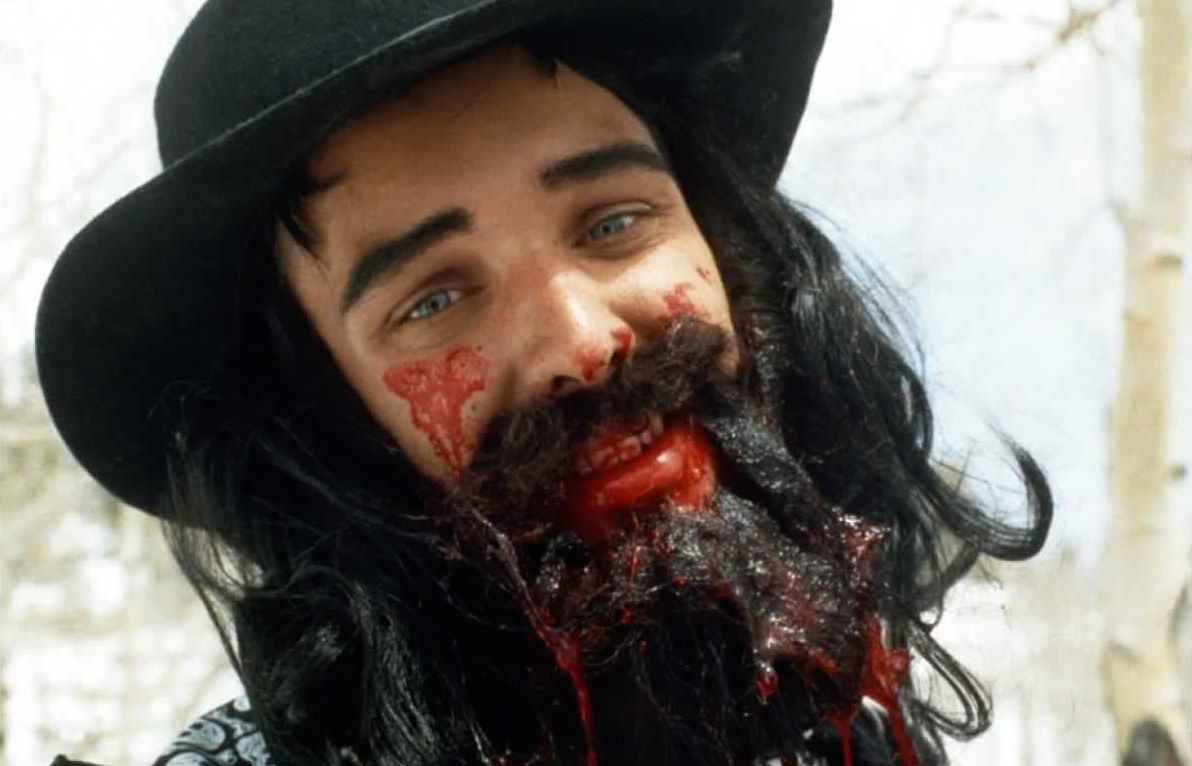
From the first scene in the movie, I already found myself laughing with amazement at how a film with a small budget made by college students was put together. Right after when we get a disclaimer explaining that the violence has been edited, the first scene we see is Packer killing and eating people in extreme grotesque ways similar to how a "Friday the 13th" film would play out their death scenes, where the only color that stands out is red as everything else appears to be faded to black and white (like in a Hammer horror movie), as we're treated to some very impressive gore effects and make-up designs for the victims that are inventive and fleshy, if not realistic. I didn't get to the meat of the story yet and already the film looked better than I expected. Afterward the film's look continued to impress me as I was able to see the different towns and outfits that resemble the period that the film is set-in, while still looking a bit exaggerated to the fit the film's comedy. And when we see the characters walk across the mountains on their trip, the locations that they chose and how they filmed it look quite beautiful. Trey even went out of his way to film the trail scenes in the very same courtroom where Packer was tried to give it a bit of authenticity. Now as much as I praise how their efforts for putting the film together from a visual stand-point are, that doesn't mean that the film's low quality doesn't show. The locations are nice, but half of the time I get the impression that they're being filmed at a nature preserve or a ranch, as opposed to being lost in the mountains which takes you a bit out of their struggle for survival since the environment feels local. The gore effects are nicely done, but there are times where you'll feel the manipulation of the effect and see some less impressive ones that are incredibly hokey (like when they are carrying a separate head). And the actors, though all of them are putting their heart and soul into the film, don't appear to be believable enough that they are people from the late 1800s, as some of them are shown to be obviously wearing fake beards.

Related image

However, even though you're constantly aware that this is a low-budget film made by amateurs who received enough money to do more than what the average college student can do with a camera, the film doesn't shut itself away from its low-quality but instead embraces it and uses it to its advantage to create its own style while still being humorously insane the same way that "South Park" does through its cheap animation. And I like that the film isn't constantly mocking itself to the point where you feel that you're watching college students fooling around wasting all this money by having little focus on the story, and just be filled with one gag and song sequence after another, because the film does keep its focus on the story, giving you the impression that Trey and Matt sincerely want to offer a different point-of-view on such an infamous person with a well-structured story where they'll simply work their gags around it. From a humor standpoint, I can't say that this movie is as funny, or shocking and offensive as the stuff that the duo would later create (the film isn’t even infested with as much gore as you'd probably think), but there's still enough laughs to be had. Some of the lines and the delivery from the actors can bring a big chuckle; the visual gags are enjoyable if not die-hard hilarious (with a couple that are blink and miss), and the pop culture references surprisingly fit the story than they are random and stupid. As the film's tagline would suggest, most of the parodies to pop culture lean more toward "Oklahoma!" and "Friday the 13th" which makes sense given its topic, setting, and that it's intended to be a musical! You get the "Oklahoma!” feel for how the musical scenes set in the old west are shot, sung, and choreographed where there are a few sequences that make fun of scenes from the show, while the stuff involving "Friday the 13th" show over-blown grotesque murders and the killer being unstoppable, as the characters enter a dangerous land where a crazy old man (dubbed by Trey Parker) claims that they are "doomed". And though "South Park" wouldn't become a show in 4 years after the film's release, there are a few of the show's classic jokes and trademarks added into the mix, such as a mock disclaimer, Matt Stone having a similar hairdo like Kyle when removing his hat, and a singing voice heard early in the film that sounds similar to a certain fat big boned racist brat, let alone that the film is satirizing real events in a matter similar to how the show would, thus making this film even more intriguing for how we're seeing Trey and Matt's famous humor at the primitive stage of their career. 

Related image

Considering how anyone who knows their works will know what great songwriters they are for musicals whether it’s on stage, on TV, or for the big screen, their talent is also greatly showcased in this film too! Again just like the story and putting the film together, the music isn't lazily written, actually, I feel that these songs are quite underrated in Trey and Matt's musical library. The first song of the film "Shpadoinkle Day" as Packer rides on his horse, plays out as a charmingly funny satire on the scene when Gordon MacRae rode onto the screen on his horse singing "Oh What a Beautiful Morning" in "Oklahoma!". The song is as upbeat and tuneful as the song it’s parodying, only Trey Parker uses a silly made-up word to describe what kind of day it is as he phones in the charm and corn of this scene and at one point intentionally sings under his breath than belting it out as operatically masculine as MacRae would. The song is sung briefly two more times in the film and they each sound just as fun and cheerful as the first time its sung. Another song that captures the joy of the first song, is "That's All We're Asking For", where the characters on the expedition sing about what they want when they find the gold, that gives good insight to the characters, as Trey upstages them with a beautiful solo of what he desires for his horse, Liane. And much like in "Team America" where we had a sad reprise of the kickass theme song, there's a downbeat reprise of this song as well. There are enough happy songs in the movie that are catchy, but sometimes they'll be happy for the wrong reasons, like the "Hang the Bastard" sequence for instance. The scene is shot and played-out to be as happily gigantic as a musical scene from "Oklahoma!", but the darkness surrounding the sequence are the lyrics where they treat their excitement about watching a person getting hanged as if they are going to an annual party. And as if that a group of town's people expressing complete joy over watching a man slowly die isn't enough, before that scene there's the "Trapper Song" where a trio of fur trappers (their leader's singing voice being obviously dubbed by Trey Parker) sing about their love for killing animals, that's not one of the better songs of the movie for its lack of energy and not being as memorably catchy as the others I've mentioned, but is still entertaining and does get quite nasty just by the lyrics alone. The film does have its slow love ballets too, the best one being "When I Was On Top of You" that Packer sings after losing his horse that's played out as a heartbreaking scene except that the way he sings about his horse sounds as if that his horse was his lover, that contains lyrics with enough innuendos to make it seem humorous for how wrong it sounds. As sentimentally humorous as this love ballet is, the song "This Side Of Me" sung by Polly which isn't as funny or touching. It's sung nice, and there is a good gag presented in the scene, however, it's pretty bland and forgettable for how generic it is, and the gag that we do get starts out funny but unfortunately overstays its welcome as everything else surrounding the scene visually is dull to watch. If you had to ask me what my favorite song in the movie is, it's "Let's Build a Snowman" sung by Swan (John Hegel) that's an incredibly catchy, happy, and hilariously corny song that just comes out of nowhere at the worst time. And what makes the scene so funny is everybody's reaction to it. It's just priceless, especially when it's sung a second time. It's a song that I could sing and listen to more times than "Frosty the Snowman" or "Do You Want to Build a Snowman". Apparently, there’s a short deleted song that was filmed for the movie and shown in non-US releases of the film titled “Don’t be Stupid” that involves the prospectors who turned down going on the trip telling the others who are about to head out, to at least wait until spring. It’s a shame that this short song isn’t featured in US releases because it not only contains cleverly funny lyrics but its sung incredibly well too. But at least you can currently find the scene on "YouTube"!

Related image

At the center of the film, you have Trey Parker making his first on-screen debut, proving that he can carry a film without speaking into a mic off-screen. He doesn't look confused on how he should behave, nor appear to be awkwardly shy when acting, he completely throws every single piece of talent and energy that he has for the camera showing that he's confident in the role and the project. The only time he was reported to be shy when filming is when he had to do kissing scenes with Toddy Walters until he, later on, re-shot the scenes after the two dated, where the final product appears to be that he's never felt that way around her off-screen. Through his delivery, movements, and expressions he practically sells the movie for how into it he is, making his presence overall a delight to watch, as he greatly shows all his talents as a performer before becoming famous for it. On top of it, while being funny, he appears to be very charismatic as well. His love for his horse is silly, but he still gives his character enough sentiment for you to still feel bad for him when she runs off and even touched by it as wrong as it may sound (not to mention that the horse had actually thrown Trey off and caused him to fracture his hip during the early stages of shooting). And when he's playing up the corn for scenes that play on the film’s gay musical nature, he still comes across as charming for how likable he makes his character out to be.

Image result for cannibal the musical cast

And as I mentioned earlier, though Trey steals the show, everyone else puts the same amount of passion and effort into their character as he does. They're not the greatest bunch of actors, but I can't say I found a performance where the actors appear to be disinterested or half-assing it because they all look committed. With that said, the characters do fall a little short. There are plenty of ones that stand-out, like Swan who is always optimistic; the lady seeking George Noon (Dian Bachar); the goofy bully trappers; and the tribe of Asian Indians known as the Nihonjin tribe (played by Japanese exchange students, and their leader is played by the owner of a local Sushi restaurant). But characters like the Frank the butcher (Jason McHugh); Polly; the aspiring Mormon priest (see there are even references to Mormons in this film too) Shannon Wilson Bell (Ian Hardin); and even Matt Stone, though not bad performances aren't as memorable or that interesting. Actually, most of the characters including the ones that do stand-out are mostly just quirky, there's very few who actually develop and change in the story. And when the supporting characters do change, it's not as intriguing thus not making it feel all that deserving. The only fascinating character in the film is once again the main character, as the others exist to either entertain or move the plot along while staying relevant to the people that they are based on.

OVERALL THOUGHTS

I don’t want to just simply consider this film to be one Trey Parker’s and Matt Stone’s underrated works, but to also be one of their important works as well for showing what ambitious filmmakers they were during their early stages in their career, and how plenty of their material in this film would later be carried on into the films, play, and TV show that make them stand-tall. I won’t go as far to call it to be one of their masterpieces because it isn’t all that funny, the story while well put together isn't too intriguing or deep, the characters (aside from Packer) are nothing too special, and I can see it's low budget quality turning off the majority of casual viewers. But with that said, there’s still plenty of fun to be had from the performances (especially from Trey Parker), the humor, the cheesy yet impressive visuals given their budget, and the songs. And if I had to judge the film on its own if we lived in some alternate universe where Trey and Matt didn’t become famous after the film, it's still highly impressive for what these students did with the tiny budget they had to make a full-length picture where the hard-work and passion certainly does show that in the end creates a legitimately entertaining movie, which I find to be inspiring. If you’re a fan of Trey Parker and Matt Stone and want to see one of their early films in their career when they were just starting out, or if you’re an aspiring filmmaker who’s looking for some inspiration when filming independent film projects, this is a must see! Also be sure to check out the fake trailer that led to the making of this film, because that too (and even if I had to judge it on its own merits) is just as enjoyable and impressive. 

Sunday, July 29, 2018

THE SEARCHERS

After giving such great praise to a classic Spaghetti Western and the trilogy it came from, still being in the western mood, I'm going to review a film that many critics and film historians claim to be one of the greatest American westerns of all time...

Related image

The first time I ever heard about the movie was during a trip to Disney World on "The Great Movie Ride" at Disney's "Hollywood Studios" where I was exposed to a trailer of the film and...
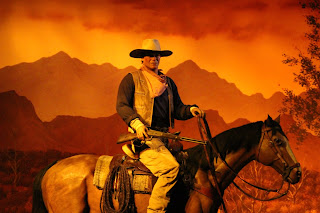
Image result for The great movie ride John Wayne

an audio animatronic of John Wayne as his character Ethan Edwards telling guests to turn back. I at the time forgot the name of the movie for how young I was, but remembered that it was a western starring John Wayne. So in hopes for me to eventually stumble across the movie, I bought and rented a few John Wayne westerns for a short period of time, until I found the name of the film through my research of the ride back in Middle School. I then rented the film a while later at my local library and found myself enjoying the visuals, John Wayne's performance, and its sense of adventure, but I remember having a strong disconnect as I was watching it. I don't know if it was because the film failed to suck me in; or if it was the time and place I was watching it, since I was in the living room in front of my family where there was a lot of chit-chat going as the DVD kept skipping. I haven't seen the film since then, so after purchasing a copy, being in a quiet environment, and having more of the motivation to watch and review it, is the film really as grand of a western classic as its been hyped up to be and that I was too distracted to get invested into it, or is it an overrated film that was more influential for its style instead of substance? ON WITH THE REVIEW!

Taking place in Texas in 1868, John Wayne stars as former Confederate soldier and Indian fighter Ethan Edwards, who after a few years returns to visit his brother Aaron (Walter Coy), Aaron's wife Martha (Dorothy Jordan), and his family including little Debbie (Lana Wood) and her adoptive brother Martin (Jeffery Martin). After hearing about a native tribe stealing cattle from their neighbor Rev. Captain Samuel Johnson Clayton (Ward Bond); Ethan, Clayton, and Martin, go out to recover them only to find out that the theft was a trick to separate the men from their families. When Ethan and Martin return to Aaron's ranch they find the place burned to the ground with everybody murdered except for Debbie and her older sister Lucy who have been abducted. Filled with a lust for vengeance, Ethan and Martin embark on a 5 year search for the tribe led by the ruthless chief Scar (Henry Brandon) to find the girls.

Image result for the searchers 1956 snow

When "The Searchers" was first released the film wasn't considered to be one of the greatest western films of all time, or even so much as one of the best films made that year. It was pretty much seen by critics as another western collaboration between John Wayne, and film director John Ford with a simplistic adventure premise that had everything you'd expect to see in a film of this type. When I first saw the movie, I had a similar reaction because it did feel like any ordinary western made at the time, but I didn't think it was bad. I was still eager to know if they'll succeed with finding the girls or not, and how far or close they are from the tribe. And after seeing it again, though I knew how the film was going to end, I still found myself hooked in their quest as they go from one visually distinctive location after another where they would either find a clue, get ambushed by Natives, or revealing something new about themselves, while being given top notch performances from the cast, especially John Wayne who obviously stands-out the most from the others because he's freaking John Wayne, and gives all the classic mannerisms when you think of "The Duke".

Related image

As we're given an exciting adventure, we're treated to some of the best visuals that John Ford has ever captured on film during his film career! Right after the film's opening credits, we see a black title card telling us where and when the film is set, which at first it seems like Ford is going to make darkness and the title fade away and cut to the desert landscape where Ethan's family lives. But instead, after the title card disappears, we're still in total darkness, until we see a woman opening a door right in front of us exposing this wide-open beautiful landscape where she and her family live as John Wayne rides into the picture to greet the people he's left behind for the last couple of years. As soon as I saw that opening shot (completely forgetting all about it from my first viewing) I felt teleported into the film's world for how surprising and glorious it looked, when the opening credits were simply played in front of a backdrop brick wall providing no clue of what's in store for the viewer. It's almost as if Ford was intending to make the film's opening credits feel like an overture in front of a distinctive closed curtain to a play, and using the shot of the door opening to reveal this western world as a symbol for the curtain rising without you even seeing it coming. And when the film ends, it ends with a door closing taking you back in total darkness, away from this western world and back into reality as the music finishes, just like how a curtain closes at the end of a show.

Image result for The Searchers desert

I remember the film looking visually pleasing to the eye, but just like the opening and closing shot, I didn't remember the film looking this gorgeous! How Ford captures places such as the dusty painted desert landscape in Monument Valley, the foggy swamps, and the snow covered hills of Canada creates a world of both beauty and hardship, because as you're admiring the land for its colors and wide open spaces you're also getting a grip of this harsh reality for how vulnerable the people living in it are for how large and brutal it seems. But as if capturing these locations doesn't make the film look as beautiful as gazing at the auras, Ford enhances the beauty of the film for his since of art-direction from his use of costumes, lightning, and even the make-up painted on Scar's face that just make the colors in this film really pop-out at you. However, when a scene calls for something dark and grim, Ford tones down the colors just enough for them to stand-out, but lets the darkness, shadows, the ominous sunset, and fires engulfing the area be the certain of the visuals when creating mood. And given that the film has such breath-taking visuals to suck you into its atmosphere, the film's score composed by Max Steiner (who has composed epic film classics such as "Casablanca", "Gone With the Wind", and "The Treasure of the Sierra Madre") does the same amount of justice as he did for his other works. It sounds as big and grand as Ford's eye for vision that creates tons of thrill and excitement, while also sounding heartfelt and ominous in the places where it needs to be without making the scenes it’s playing for sound pretentious and corny for how perfectly it fits the scene! The film even has a song called "What Makes a Man to Wander" sung by "The Sons of the Pioneers" that's played in the opening credits and closing scene of the film that does a nice job of setting up its western tone and having you exit the film as you're listening to such wonderful harmony from a famous singing group who have golden classic country voices.

Image result for Searchers Look and Martin

The film seems to deliver everything you would want to see in a western starring John Wayne, are there any problems that the film has. Well a few. The most common criticism that the film suffers from the view of a modern audience member is the portrayal of Native Americans, for having the stereotypical characteristics that is considered to be inaccurate and stereotypical, as the leader of the tribe is played by a white actor in brown make-up, which is easy to understand why people would be turned off by the film for how offensive it is. The most cringe worthy moment involving the Native Americans that I found to be quite uncomforting is the scene when Martin kicks a native woman that he accidentally married down a hill after she tries to cuddle with him, that was supposed to be funny, but just comes across as cruelly mean-spirited for its abusive, racist, and sexist nature towards women who aren't white and speak English.

Image result for The Searchers Martin and Laurie

While the film has a captivating adventure story, there's a subplot that brings the excitement and mystery to a halt, and that's the romance between Martin and a farm girl who he shares a past with named Laurie (Vera Miles). It's not that these scenes are bad. Hunter and Miles do have good chemistry, there are many parts to this subplot that connect to the overall story to still keep it moving forward, and it does still manage to entertain. The problem is a lot of the elements presented during this subplot feels gimmicky and forced. Considering the fact that John Wayne doesn't have a love interest during the course of this film and is accompanied by a handsome young actor, since many westerns at the time feel the need to throw in some kind of love story, the romance between Martin and Laurie feels shoehorned just to give audiences what they want, even though it's not really the focus of the film or anything really that important to the overall plot. And to keep these scenes from being boring considering that the two have little of an arc to work off-of except for the fact that Hunter is too busy searching for his sisters rather than staying behind with her, the film throws in a few 30 second to 1 minute long song and dance scenes; and some awkward comedy whether it being a character as over the top as Laurie's Father (John Qualen), or a fight scene that's played for nearly the same amount of laughs as the ending to "The Quiet Man" just without it being as goofy and long. These aren't necessarily the only parts of the film that are guilty of these forced choices that don't fully work, for instance there's a crazy Indian fighter played by Hank Worden that Ethan and Martin constantly encounter through their journey who's trying so desperately hard to be both weird and funny, that he comes across as weirder as opposed to funny. It's just that this overall love triangle that Martin gets into are the parts of the film that greatly show most of its weaknesses for how hard it’s trying to entertain to keep the audiences' attention.

The film overall is indeed a well-made western that has the typical tropes (both good and bad) that westerns at the time were known for. So why is nearly every critic, film historian, and fan of westerns claiming it to be such a masterpiece? Why does this John Wayne film get the most attention when compared to his other western classics?

Image result for the searchers john wayne

Well when most of us hear John Wayne's name we think of him as the charismatic American hero who we love to always root for! So how about having a film where he's still the main character but isn't as charming and likable as he usually is. When I described the film's plot, I did say that he was searching for his kidnapped nieces but what I didn't mention was that he's only searching for them just to kill them! I certainly bet that you wouldn't suspect John Wayne in a film to do something as sadistic as that! Why does he wish to commit such a senseless act, because he hates natives with an extreme prejudice, and as far as he is concerned once the girls have been converted to their culture, he no longer sees them as his white nieces believing that they have been tarnished and that there's nothing he can do but eliminate them! So, Wayne is not only thirsty for the blood of innocents related to him, but he's a flat-out racist too, who doesn't keep his racism to himself, he's completely opened about it. It's not often that you see "The Duke" play a character this vicious and cold, if anything it's highly rare. He despises Native Americans so much, that he knows a great deal about their culture and war strategies and uses it against them rather than understanding why they are what they are. Best example is when he shoots out the eyes of a dead warrior explaining that without his eyes he can't enter the spirit-land, as his only way of killing a native from beyond the grave! Ethan's racism isn't the only draw-back to make his character different than the others he's played because he is bitter and condescending to almost everyone he meets whether its Martin, or Rev. Captain Samuel Johnson Clayton, who without remorse is willing to put their lives on the line for his own protection and personal gain; and has a long history of committing robberies and other crimes which all makes him the darkest and ominous character that John Wayne's ever played who's frankly more frightful than the film's main villain!

Related image

So, if Ethan is so ruthless, racist, and sick, why were so many audiences attached to this character? Is it just simply because John Wayne's playing a different kind of cowboy, well it is shocking and its highly fascinating to see your lead in a western at the time be so empty and full of hate, but it's not the heart of why many people find him so interesting. It's merely the complexity of his character that makes him so fascinating. Despite coming off as rude and twisted, there are times where he'll have his softer moments (like how he interacts with his brother's family and wife Martha), and a sensitive side exposing his vulnerability that he tries hard to keep away from other people. Ethan hates Natives, but despite Martin being part Cherokee it's revealed earlier in the film that Ethan rescued him after his family was slaughtered by the Comanche. And though his hatred towards Natives is awful and wicked, you understand why he's become the man he is for what they did to his brother's family and (subtly hinted) his wife where these acts of violence that they've heartlessly carried out make him behave just as vicious as they are. Making matters worse for Ethan, he is also a loner. He has the knowledge that Natives have, but refuses to aid or be a part of them because of his hatred. He's surrounded by people who need him for his brains and talents, but Ethan doesn't feel like he belongs with them because he's not like them. And the only people that Ethan ever showed deep love and affection for are all dead! The film's focus is more on the psyche of Ethan and the people around him, than it is on the search, if anything that element is only there to tie everything together while giving audiences what they would want to see in a western. We know about Ethan's bigotry and see him do a few heroic deeds from time to time, but the film never fully explains how far his racial intolerance goes and how much he cares for the people around him, it's more up to the viewer to decide, making this one of the early westerns that challenges its audiences by making them think rather than just entertaining them where everything is all black and white.

 Image result for The Searchers john wayne

Ethan maybe the film's main character, however the film never tries to make his racism and acts of vengeance to be justifiable because when you see Ethan scalp a warrior or cut them off from their food supply, these moments are grimmer and more shocking than they are played out as an act of heroism for how down-beat it is. Even during a scene when we see the Calvary invade a tribe’s camp, as obvious that the scene is more triumphant on the side of the white man taking down the natives, the scene is given a dark edge to prevent it from being too one-sided because in one shot we see of a frightened Comanche woman protecting her child from gun-fire that's obviously not supposed to mean that the violence happening in the scene should be rooted for. There's also another massacre towards a Native tribe before the attack where we focus on the after-math instead of the battle, and how this scene plays out as we gaze at the dead bodies of numerous warriors and innocents from the tribe is gloomy and disturbing as opposed to being glanced over and coming off more as a dead end to the characters journey, and that the soldiers were right for killing nearly every Comanche in sight.

Image result for Martin The Searchers

The most obvious attack on the film's themes against racism is Ethan's sidekick Martin. Being part Cherokee, he gets the most abuse from Ethan more than any other character in the film because of his blood-line, and for opposing against Ethan's objective for killing his nieces than retrieving them, since Martin still sees them as family whether being converted to being a Comanche or not, and will do whatever he can to block Ethan at every turn. If you really analyze the arcs to Ethan and Martin, you'll discover in a shocking twist, that Martin is the film's true hero. Martin develops from being a whiny innocent sidekick, to a much tougher cowboy who's determined to do the right thing as the film progresses from his experiences during this adventure and Ethan's attitude towards him. Ethan though having his moments of heroism never really changes from this whole journey, and still remains as the racist loner from when we first met him. In fact when you get to the film's climax the focus isn't on the characters fighting Scar's tribe, it's really the conflict between Ethan and Martin on whether or not Ethan's going to still do what he's been planning on doing for all these 5 long years. The strained relationship that these two have together is honestly one of the most interesting and compelling relationships that I've seen in a western film for how they are both the complete opposite from each other where the film doesn’t really address how much they actually do care for one another.
Related image

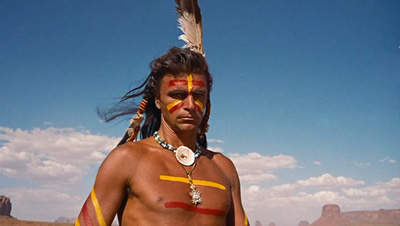
A character who is just as fascinating as Ethan is, is the tribe leader Scar. When watching the film for the first time many casual viewers who watch Scar will automatically view him as the average one-dimensional main villain, which is easy to grasp why. He's killed and abducted Ethan's family, has an intimidating presence whenever he's on-screen, and has slaughtered countless white soldiers and settlers as he kidnaps women and takes the scalps from some of his dead victims as trophies. He's as barbaric as a villain of this type can get. However, what separates Scar from being the typical savage archetype that Hollywood was doing with most native antagonist at the time is that he has a reason for his savage acts. Ever since his two sons have been massacred by the white man, Scar fueled with hate and vengeance wanted to take revenge against the white race for what they've done to his sons, and most likely as well as what they are currently doing to his people. Sound familiar? That’s because he's Ethan's native counterpart who are both alike in many ways but can't accept each other's differences from their blind hatred towards one another's race. Much like how I described how rare it was at the time to have our leading hero in a western (especially when being played by Wayne) be an anti-hero with flaws that are too numerous to mention, diving into the problems of the white settlers violently taking over the Native American’s land through the perspective of a Native American villain was not usually common either. Usually the only way you'd see a Native American portrayed in a positive light in a western is if they were partnered up with the cowboys, otherwise they'd be portrayed as cold hearted savages to make the white characters invading their land look heroic and righteous. To have a western make the Native Americans seem more human and relatable by showing a bit of their prospective of the racial tensions involving them though not the first film to tackle it is still quite ambitious and a-head of its time. Is it a dignified portrayal of Native Americans, no they still fall under that stereotypical archetype of how America viewed them at the time which definitely reveals the film's age. But Ford's heart in delivering this message is still in the right place and having him hiring actual Native Americans to be casted in the film definitely brings a sense of realism to their suffering, if not an accurate depiction to their culture.
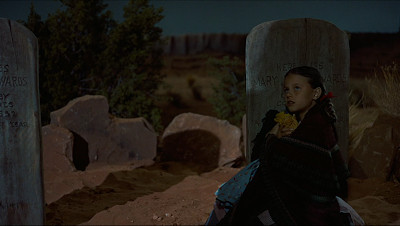
Image result for the searchers grave

Above everything that makes this film such a brilliant and different kind of western is how much meaning and depth is given to it. It's one of those films where the more you watch it, the more you'll notice little details that connect to the film's themes and characters. Whether it being a small piece of dialogue that's easy to overlook, an interaction between the characters that you haven't noticed before, or visuals that either add a whole new layer to character or situation or have much more meaning to them than they appeared at first glance. It's a western with so many layers of emotion, character, themes, and meaning that it's not all spelled out to you or preaching its message, it's letting the visuals and interaction between the characters do all the expressing as what a visual medium should do! Even during the mediocre parts of the movie, there's still some form of intelligence behind it to prevent them from being a complete waste of time.
Related image

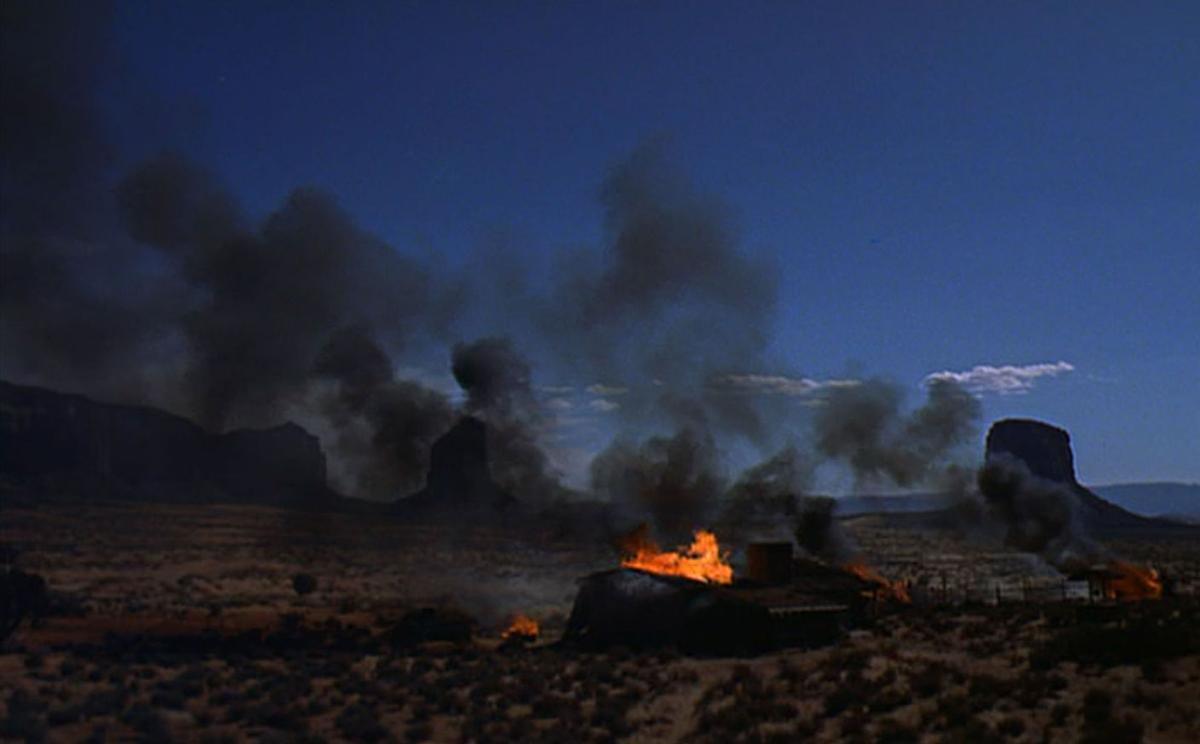
Because of the film's grand visuals, complex characters, clever use of story-telling, and unsuspected twists to the western genre it went on to influence numerous successful writers and filmmakers, where they would either pay homage or take elements that made the film such a ground-breaker and perfect upon it. Spielberg would use the concept of people who are opposite from each other working together in finding someone in a cruel environment in his World War II epic "Saving Private Ryan", and would have a scene of a guy in shock clenching his hands in the sand after seeing a dead body in his blockbuster thriller "JAWS". Martin Scorsese and Paul Schrader would have a modern parallel to the characters of Ethan and Scar in "Taxi Driver" through the characters of Travis Bickle and Sport. Director David Lean studied the visuals in the film countless times in order to create what many consider to be his most visually breath-taking epic "Lawrence of Arabia". George Lucas would use the idea and imagery of a farm burning down with innocents being killed as the start to Luke Skywalker finally setting foot out of Tatooine to embark on an adventure through the galaxy in "Star Wars". The image of the door closing at the end of the film, gave Francis Ford Coppola the idea to end "The Godfather" on a powerfully sad note. And of course Sergio Leone would take some of the film's darkness and anti-hero qualities from Ethan, and exploit them to a whole new level in his "Dollars Trilogy" with Clint Eastwood. The film has also influenced one of the greatest Rock N Roll musicians of all time Buddy Holly to write one of his essential songs after John Wayne's famous catchphrase "That'll be the Day".

OVERALL THOUGHTS

There's so much more that I wish to write and analyze about the film in terms of scenes, techniques, themes, and subtle details in the story after doing some research and watching some of the scenes from the film a few times to study them in preparation for this review. I've pretty much only talked about half of the things that make this film so rich and clever, and as tempting as it is for me to provide more reasons and insight on the film's genius, I believed that what I've covered should be more than enough to give you an idea of how magnificent this film is! No film is perfect, and this film does have its issues regarding its dated depiction of Native Americans, and shoehorning in certain tropes in westerns that don't feel needed for this film. But none of that overshadows of what a smart, ambitious, and influential milestone of a cinema that the film is rightfully known to be! It manages to excite, surprise, and keep you captivated in its lovely and dangerous western environment and story-line, while also taking risks and challenging its audience, pleasing both the casual film-goer who just wants to be entertained, and the scholar who wants more than what's expected in a film of its kind.