Search This Blog

Showing posts with label Super Heroes. Show all posts

Monday, July 10, 2023

Signaling Batman and “Calling Dick Tracy”: Noir in Comic Book Movies

When a person thinks of comic book movies, the typical image associated with the genre is that of superheroes fighting against supervillains in urban cities or other worlds either colorfully bright or intensely dark. While superheroes give comic book films their identity, some movies in the genre use styles and character archetypes that are remarkably reminiscent of classic film noirs. Some films are classic crime detective stories like Dick Tracy, while others involve anti-heroes and vigilantes taking the law into their own hands, like Batman. The type of noir found in these comic-book movies is Noir lite. James Naremore defines the style as "high production values, and straightforward comic-book heroic are mingled with over-the-top performances, double-entendre dialogue, dystopian satire, and a good deal of directorial self- consciousness." As over-the-top and otherworldly as these films appear, what sort of relations do they have with the noir style, and how does noir fit well within the comic book film genre? 

Although there is no one answer to the question of how films qualify as noirs, there are distinct features in the category's aesthetics and mise en scène that are more heavily emphasized than usual. In multiple Batman films, Gotham City usually has heavy shadows and low-key lighting to create a city full of danger, corruption, and poverty, making it a character itself. Christopher Nolan's Dark Knight films give the city a realistic and modern approach as if it were an episode of Law & Order just with a superhero. In terms of live-action Batman films, the ones that come closer to the noir style are Tim Burton’s films, especially the first film Batman


Gotham City feasts upon the noir style. In daylight, the city looks cold and gloomy from its faded colors, the shimmer of light, and streets covered in filth. At night, the city is practically consumed by darkness, smog, and shadows, where the light source comes from worn-out neon-lit signs, streetlights, car lights, and cryptically lit buildings lacking any color. The dark slum city makes for a perfect environment for Batman to blend into the shadows and for his rival, the Joker, to stand out among the crowd for his bright and festive appearance (sometimes aided by music sung by Prince). In the earlier scenes of the film, many criminals and corrupt officials wear trench coats and fedora hats when dealing in alleyways or fighting against the police in a smoke-polluted factory. What further gives Gotham City its unique noir flair is its German Expressionism influence. Some of the greatest film noirs were directed by German filmmakers, including Fritz Lang, who brought their expressionistic style to western audiences through crime films. Gotham has similar visual designs to the film Scarlett Street. However, it also has a futuristic gothic look like Metropolis (1927) with multiple factories and unusually designed buildings tightly close together with sharp edges. Tim Burton would play with the expressionist style for Gotham City more in Batman Returns (1992), only to have it look like a nightmare resembling The Cabinet of Dr. Caligari (1920) and Nosferatu (1922), rather than having the classic visual noir edge from the earlier film. 


Despite the hero dressing up as a bat with gadgets, and the villain in clown makeup, most of the film’s environments are similar to the classic noir style. The plot and characters in Dick Tracy meet the standard noir tropes, but the overall look for the film is more unconventional than Burton's noir imagery in Batman. The film takes place in an urban city, has heavy shadows and creatively odd angles establishing an uncomforting environment, and most characters are dressed in classic tough-guy attire. Yet, as familiar as it all appears, the use of bright heavy comic book colors and designs strangely compliments the noir imagery. Sometimes the formation of light reflected within the city, or inside a building would cast shadows that looked like a painting in classic noirs. In Dick Tracy, there are literal distinguished matte paintings in plenty of scenes further highlighting the city as a weirdly unpredictable place of danger and dread. Film noirs notably had unconvincing rear projector effects (even for the time) for people driving in cars, while Dick Tracy goes "cheaper" by having a single-colored background with no sign of civilization. When buildings appear through a window, it would have the city painted in one color, looking like a painting on a wall or a cardboard cutout as opposed to appearing realistic. 

The strangest part of the film's visual design is how the distinctly odd-looking characters phase no one. The gangsters Tracy fights all look like people from an old carnival freak show. Hardly any of them look like the common crooks that would appear in film noirs, for having a giant head with a tiny face, a flat-shaped head, a wrinkly old face resembling Freddy Kreuger's, huge lips and chins, and so on. What is even stranger about the characters’ appearance are the wardrobe colors. The gangsters wear clothing as big and bright as a suit the Joker would wear, while Dick Tracy wears a bright yellow coat and hat when he should be wearing darker clothing when sneaking around. No character acknowledges anyone's appearance unless they have no face, viewing it as the norm. As bizarre as Tracy's world appears and as unconvincing as the effects look, they contribute to a unique style unlike other comic book films and film noirs. Film noirs like Detour looked fake yet had an excessive style resembling a person's haunted memories with a grounded story. As many like to think back to classic black-and-white film noirs, there were a few exceptions shot in color, such as Leave Her to Heaven, for example. Dick Tracy is a combination of the styles for those films just made to look like a comic book with a conventional crime story in an exaggerated world that mostly plays itself as seriously as other film noirs. 

The character of Dick Tracy is the typical detective who goes after the criminal underworld, with corrupted superiors holding him back. Tracy's personality is as hardboiled as that of a character like Sam Spade in The Maltese Falcon, who is rough and tough when facing criminals. But Tracy's actions are more in common with Leonard Diamond in The Big Combo. Both are protagonists with similar goals and a determination to place a powerful crime boss behind bars and each eventually finds interest in his rival's lover despite already having a girlfriend. In both films, each character has the criminals in his clutches a few times (before the climax), while at other times, he is at the mercy of his foe. Tracy, at one point, gets framed for murder by a mysterious antagonist leading to his arrest, like the victim and protagonist in the noir thriller Stranger on the Third Floor. Part of what makes Dick Tracy clever and yet unappreciated by audiences, is how the character and storyline are a homage to many noir tropes, just set within a comic book world capturing the film noir style. The movie is familiar in many ways, except hardly anything about it feels fresh and new outside of its visual appeal. 

Tracy is a conventional by the number's noir protagonist, while Batman is subtler. It is not to say people were unaware of Batman's detective skills or that no dark comics starring the caped crusader came out before or during the release of Burton's Batman film. However, before the Burton film, Batman was portrayed as a campy superhero in film and television media. In the 89 movie, Batman looks as intimidating as a noir protagonist if they were to dress up like a bat. Like Tracy and Diamond, Batman is obsessed with cracking down on the Joker's criminal organization, except he is portrayed as more than just a heroic protagonist who wants to clean the streets from crime. 

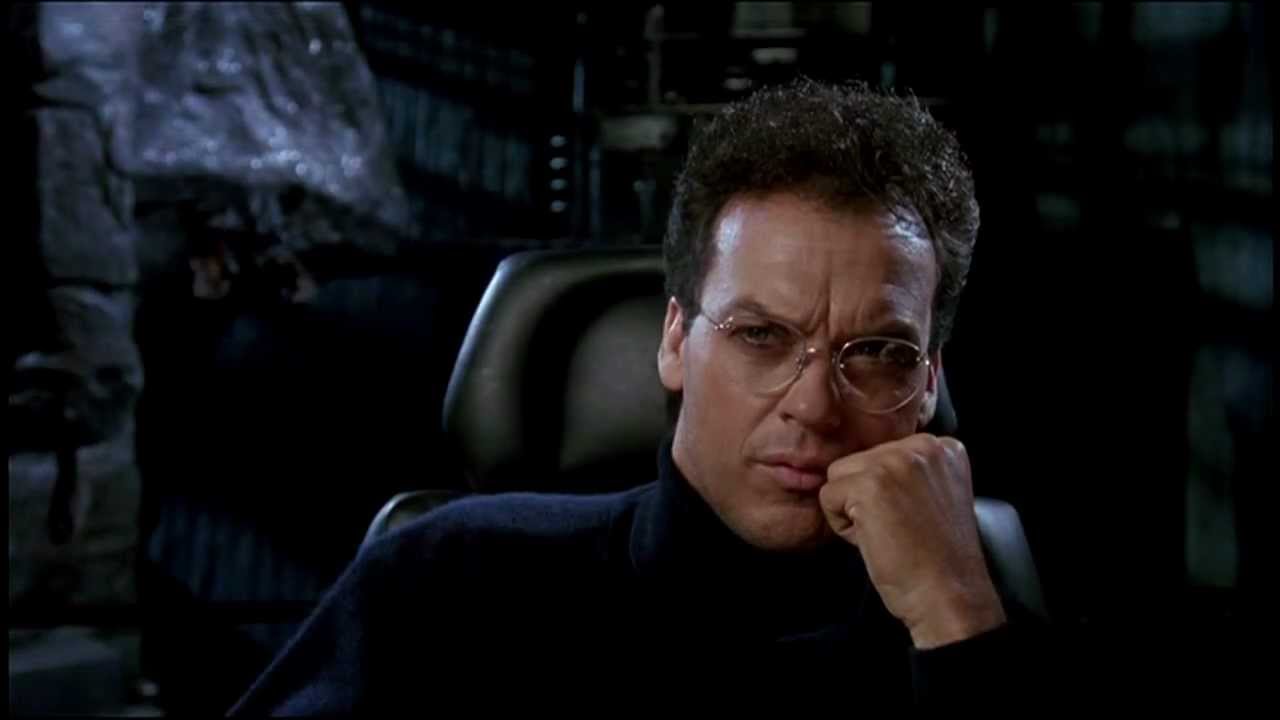
Batman is the superhero equivalent of characters like Frank Bigelow in D.O.A. and Dave Bannion from The Big Heat, protagonists who are tormented or doomed souls fueled by revenge after losing something or someone important to them at the hands of criminals. Batman witnesses his parents murdered by a criminal as a small boy, traumatizing him to eventually become a vigilante, much as Sergeant Bannion goes rogue after a criminal kills his wife. Bigelow is a doomed protagonist who is slowly dying when seeking vengeance, whereas Batman mentally feels dead on the inside. Without the mask, Batman lives a public life as a wealthy millionaire, throwing parties and doing business with other Gotham officials. While active, he is quiet, hardly socializes, and usually keeps to himself in his giant dark mansion with his butler Alfred. His public figure Bruce Wayne is his mask, Batman is who he really is when no one else is around, or a costume in which to hide while intimidating other criminals. And unlike many versions of Batman that follow (unless it was a lazy loophole), this version of the character has the urge to kill, an ideology that is sacrilegious for die-hard fans, but in this version is not out of place due to how he isolates himself and dresses as a bat to take out his trauma by hurting and traumatizing other criminals. At the start of the film's third act, Batman's revenge is further provoked when he finds out the Joker is the person who killed his parents. And even after killing the Joker, Batman is unsatisfied. He keeps himself distant from social gatherings in Gotham and fights more criminals because his mental state and skills have led him to a position where he is the only one to bring justice to Gotham efficiently. 

Catwoman is one of the few familiar noir elements in the sequel, making her the film's femme fatale. Elizabeth Cowie, in her article Film Noir and Women, believes "women may also fall victim to their involvement with the underworld, in an equivalent to the male criminal 'tough guy' thriller, using their beauty of course, but also and necessarily their intellectual talents for deceit." Before becoming Catwoman, Selina, like many femme fatales, including Susan from The Big Combo and Debbie in The Big Heat, was never directly involved in her boss' schemes. When stepping out of line, these characters would get either slapped in the face or brutally maimed by a hot pot of coffee. Unlike the others, Selina had no idea that her boss had a criminal plot, and after finding out, she gets pushed out the window, surviving the fall only to find herself psychologically damaged. Debby would seek revenge on her ex-boyfriend for the pain and scarring (physically and emotionally) he had brought to her. Catwoman would eventually do the same to her boss for similar reasons after constantly fighting against Batman, who gets in her way. Catwoman uses her beauty to let Batman's guard down before hitting or stabbing him with her claws. Catwoman would use sex appeal when encountering her boss under her Selina Kyle alter-ego, attracting him emotionally while using her wits to make up a story of having amnesia so that she can still walk around in public without the costume. Without using her attractive appearance, Catwoman convinces the Penguin that killing Batman will not be as efficient as framing him as a criminal, a popular noir trope, except it hardly goes anywhere after the police chase him shortly after he is framed. 

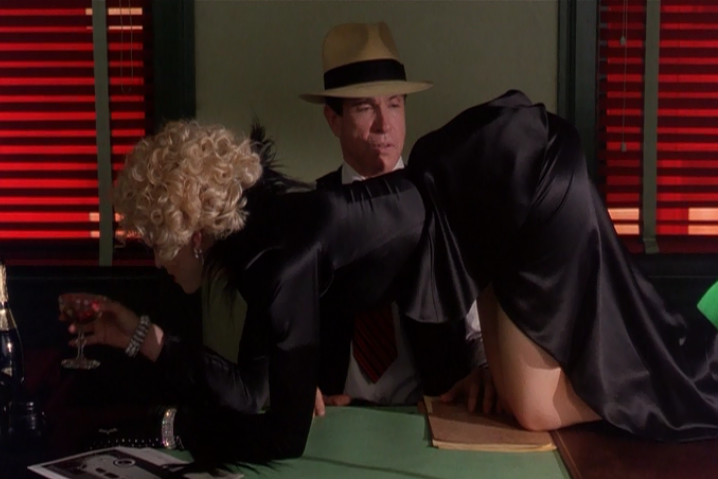
A more traditional femme fatale, with some similarities to Catwoman, is the singer at the Club Ritz Breathless Mahoney in Dick Tracy. Breathless becomes a lover to the notorious Big Boy Caprice. Aware of Big Boy's criminal status and living off his benefits, at the cost of getting stripped as an individual now seen as an item he owns and will hit to put her in her place. Breathless finds attraction towards the only man who is openly willing to put Big Boy away, Dick Tracy, and seduces him every chance she gets for him to abandon the woman he dates. Tracy finds interest in Breathless but cannot leave the woman he loves. Sometimes her flirtation gets Tracy to kiss her, but when using her body does not work, she uses Tracy's obsession with catching Big Boy to lure him closer. Breathless achieves it by leading Tracy to an important meeting and refusing to testify against Big Boy unless Tracy commits to her instead of just protecting her. 


In the end, Breathless is revealed to have an alter-ego as a gangster with no face credited as the Blank. Under her Blank disguise she goes after Big Boy Caprice, coming across as vengeful as Debby and Catwoman are against their abuser. But Breathless also plays an antagonistic role like Vera in Detour and Ellen in Leave Her to Heaven. In Detour, the doomed protagonist, Al, gets blackmailed by Vera over an accidental death he caused, while Tracy gets framed for murder at the hands of Breathless. Both women have different methods of turning against the main character; however, what makes them similar is that they are willing to turn them into the police if neither of them gets what they desire. Breathless is as hungry for Tracy's love, and affection as Ellen was for Richard, with the twisted mindset that if she cannot have him, nobody will, therefore taking great lengths to achieve it. 

It is no surprise that a comic book film differs from the classic noir style, but as evidenced in Tim Burton's Batman films, and Dick Tracy, noir elements can still clash with the genre. Gotham City resembles noir visually, where Batman and The Joker are what give the film its comic book feel. The visuals in Dick Tracy look like an old-fashioned comic book, but it also has a story and characters that are purely forties and fifties noir, just with make-up and costumes as exaggerated as the backgrounds. The doomed vengeful noir protagonist is reflected through Batman, while Dick Tracy is a hardboiled authority figure achieving justice. And the female characters that attract the protagonists are seductive, cunning, and determined to get what they want, like many other great femme fatales. The difference is that one dresses up as a cat, and the other wears a faceless mask which is revealed to be the femme fatale in the twist, making everything come full circle to Breathless' character. Batman and Dick Tracy, while not the first, were the steppingstones for film noir in comic-book movies. Dick Tracy, while mostly forgotten, was praised by critics for having a unique visual style blending comic book and noir appearing fake yet beautifully stylized at the same time. Filmmaker Robert Rodriguez would adapt Sin City similarly to Dick Tracy by having a phony but visually appealing comic book environment in a crime-driven city. The notable differences are that Sin City is harsher in tone and only uses bright colors when needed in a mostly black-and-white film. The popularity and style of Burton's Batman not only revealed a darker film version of the character that intrigued audiences far more, but the nineties animated series, and Christopher Nolan's Dark Knight trilogy, would incorporate film noir elements as well. Even the recent Batman film pays tribute to the noir style, further proving that film noir is still relevant if not shown often in comic book cinema today.

Saturday, August 10, 2019

BATMAN: THE ANIMATED SERIES (EPISODES 22-26)


Image result for joker's favor title card

A Gotham City accountant named Charlie Collins (Ed Begley Jr.), finds himself constantly pushed aside by multiple bad drivers on his way home after a rough day at work. No longer taking this kind of abuse much longer, Charlie loses his temper and chases after the next car that dared to cross his path to let out his frustration. Unfortunately, his action just made his bad day a whole lot worse when he discovers that the driver he takes his anger on is Gotham City's notorious crook the Joker. After trying to flee from the Joker, he is eventually caught and about to be "taught a lesson" causing Charlie to plea for him to spare his life with the promise that he'll do anything he asks of him in return. The Joker lets him go, vowing to call him when he needs a favor done. 2 years later, Charlie under a new name and living far away from Gotham City has been tracked down by the Joker and is needed to help the Joker plant a bomb kill at a testimonial dinner dedicated to Commissioner Gordon. Unsure how to save the Commissioner, he tries to find a way to signal Batman for help before he's forced to aid the Joker.

As you probably have noticed this is another episode, where Batman is not the focus and is barely in it. It's strange how most of the episodes in this series are more about the villains and side characters than they are about Batman. For a show titled "Batman: The Animated Series" you would think it be more focused on Batman. But despite Batman being in it very little his presence doesn't feel as wasted and unexciting when compared to his minor appearances in episodes such as "Be a Clown", "I've Got Batman in my Basement", or "Prophecy of Doom". He gets one of his best scenes that beautifully establish his relationship with Commissioner Gordon. Is given an exciting action scene when he chases the Joker inside a replica of an ancient temple with real working booby-traps in the same building where the dinner is being held (I have so many questions about this set-up). And offers a highly rare moment that Batman almost never does in the series that's shown in the very last scene which is quite refreshing to see.

It is disappointing to not see Batman take much of the spotlight, however Charlie's situation with the Joker is intense enough to be captivating. In the Joker's last appearance "Be a Clown" as frightening as the idea of a kid being in danger at the hands of the Joker was, the kid wasn't interesting as a character or had that much of a personality to makes him stand-out. Charlie who you at first think is going to be this typical bumbling dimwitted innocent with the same amount of charm and interest as the Joker's previous victim had is in many ways relatable. That's not to say that Jordan isn't and didn't have reactions that a kid watching the show can't connect with, it's just that the voice acting was pretty bland as his arc was too generically predictable. Charlie by comparison has something that both kids and adults can relate too. As kids can relate to his fear of the Joker, and trying to save lives that are at stake; adults can relate to him for his frustration with people and his job that Ed Begley Jr. perfectly sells to make his feelings towards everything feel natural. On top of him being relatable, throughout the episode we see different sides of his character to fit each particular situation for him to seem more human from an angry worker, to a loving Father, to a helpless victim seeking for salvation, to a madman who has had enough of being pushed around by people. Honestly, Charlie just maybe (at least by far) the most human and engaging innocent civilian who is not a criminal or has any heroic abilities.

Now considering how relatable, well-written, and nicely acted as the character Charlie is, because he's so emotionally helpless and always thinking of what to do, this effectively puts us in his shoes as he's being stalked and threatened by the Joker, who is just as scary here as he was when we saw him before. There are of course plenty of gags and one-liners that bring a big laugh thanks to the clever writing and Mark Hamill's delivery. He wouldn't be called the Joker if he wasn't slightly funny. But good heavens the lengths he goes too to find Charlie and bring him back to Gotham is just unsettling, and since the Joker is highly unpredictable you're never entirely sure what he intends to do with Charlie, resulting with the viewer being just as paranoid as he is, even with the knowledge that this is a cartoon starring Batman. It is merely the anticipation of the Joker's plans with Charlie and what he may do if he betrays him as he jumps back in fourth from a bouncy clown to an insane killer that increases the levels of anxiety.

If I were judging this show by the order of air-dates, this would technically be the first time the Joker appeared in the series, which certainly isn't a bad one! However, I'm only judging this by production order but regardless of how you watch or judge the series this is still an important episode for creating the Joker's iconic and legendary better-half Harley Quinn. When watching her in this episode though looking sexy in her iconic red-and-black jester outfit and speaking in a high-pitched New York accent provided by Arleen Sorkin, she does very little. We see her assist the Joker, but we don't see them really work off-each other often or have that tragic abusive relationship that makes the two such a fascinating couple. Come to think of it, we see her more without the costume than we do with it on. Probably because the creators weren't expecting her to become this popular in the series, who at the time intended her to be nothing more than just a colorful and beautiful small-time criminal working for the Joker. The reason why she was created in the first place was because the writers felt that the Joker dressing in drag to carry out his plan would be out of character, resulting to the start of arguably the best original villain that the series created.

OVERALL THOUGHTS

The episode's story is as basic as the Joker's previous outings in the series, but offers plenty of emotion, suspense, and new material to keep it from being just another battle between Batman and the Joker. Mark Hamill brings a perfect balance of laughs and chills to this deranged clown. How the episode plays up the dangers surrounding Charlie’s situation gives us a highly intense experience. Charlie is one of the best characters in the show who is not a superhero, villain, or part of the police force. The little that Batman does in this episode provides enough cool moments that make him such a grand hero as we are given a few moments that contains a little more depth to his character. And for me to say that the creation of Harley Quinn is a welcoming new addition to the series would be a complete understatement!
Image result for vendetta batman the animated series title

Harvey Bullock has arrested nervous convict Spider Conway to testify against Rupert Throne. As Conway is being transferred, a mysterious figure kidnaps him after blowing up the boat he’s on. Batman witnesses the explosion and finds a toothpick by the prison where Conway was transferred out of belonging to Bullock. Suspicious about Bullock, Batman steals his police file discovering that Bullock was taking money from Throne in the past as Conway was working for him. As Batman cracks the case, he begins to find strange clues that lead him to a half-man, half-crocodile criminal who goes by the name of Killer Croc.

I apologize for spoiling where the mystery is going for some of you newcomers, but it's just too obvious that Bullock isn't going to be the mastermind behind all the kidnappings. Mainly because we see glimpses of the monster, who goes as far to impersonate Bullock later on in the episode, so it does not come off as a shocking twist that Bullock isn't the villain. The only real question to this whole mystery is why is Killer Croc kidnapping these criminals and framing Bullock in the process, which is fine, especially if you've never heard of Killer Croc before, it just fails at giving us the same kind of clever red-herring as what "On Leather Wings" provided. However, I will say that the build-up to Killer Croc's presence is quite intense! The voice acting and animated reactions from the people being abducted as they look at him, combined with the shadows, music, and the little we see of Croc keeps you in suspense as your eagerly waiting for him to reveal himself.

When Killer Croc does fully reveal himself, he looks monstrous, threatening for how strong and bulky he is, but he isn't as scary as he was built up to be. That doesn't make him a bad villain, since he does appear to be a challenge for Batman when they fight. It's just when you had villains as scary as ManBat, the Joker, and Clayface, you'd expect him to be on the same level of fright as them given his effective build-up. But to be honest, that's nowhere near as disappointing as the lack depth and backstory given to this character. I'm not saying that every single Batman villain in the show needs an episode all about their origins or a flashback sequence dedicated to them. There is some insight given to Killer Croc's past about him living as a freak in a carnival as a wrestler who then turns to a life of crime, which is something compared to not providing foes and allies like Penguin and Catwoman some kind of background. The downside is he has a past that’s so interesting that could be given some serious emotional depth diving into the trauma and psyche of the villain to giving us a better understanding of why he's a criminal, that it instead it gets traded off for simple dialogue and Batman searching through the papers. It wouldn't be so bad if we felt some kind of emotional attachment to the villain, but its nonexistent here.

Now with that said, Killer Croc is not really the focus in this episode. The real focus is on Harvey Bullock on how both Batman and the Gotham City police perceive him as Batman tries to figure out what's going on that leads to both Batman and Harvey seeing each other in a new light, which is handled incredibly well. We all know that Harvey is a jerk who hates Batman and is willing to make-up stories about him to make himself look good (as evidenced in "P.O.V."). So to see Batman at first trying to find evidence of proving his guilt to later on protecting him makes the situation between the two of them a lot more fascinating. Despite the two not liking each other, they're still enforces of the law where Batman proves to Harvey that even he would still help him regardless how much Bullock despises. And even though it's obvious that Killer Croc is the villain, a part of me wanted to see Bullock get some kind of payback for all the hate he gives to Batman. The fact that we learn that he has a bit of a crooked past with the mafia, makes you want to see him put behind bars just as much as Batman does. But when he finally does get put away midway through the episode, it feels unsatisfying for how unjustified it is since he's clearly being put away for a crime that he had no involvement in. Furthermore, as much as Batman hates him, Commissioner Gordon though has his troubles with Harvey too, does have a soft spot for him for being a good cop, that proves that Harvey is not as selfish of a detective as we would like to think he is.

What's always welcoming when watching an episode of the show is seeing Batman spend time with the supporting characters. I keep forgetting how helpful Alfred is to Bruce/Batman from not just a father figure standpoint, or him putting himself out there to help Bruce, but for how he unintentionally give his employer ideas through his simple daily duties while Batman tries so hard to understand what a clue could possibly mean or lead too. The notable members of the Gotham City police force though having little to do (with the exception of Bullock) still have their moments to shine. Reene Montoya who has left little to no impression in her previous appearances in "Beware of the Grey Ghost" and "Joker's Favor", is given a little more to say and do. Commissioner Gordon shows a little more sentimentality towards both Batman and Bullock, while still having moments of being a tough and serious leader. And the cops involvement in the mystery and how they are voiced gives the episode a bit of a detective noir feel to it.

The animation supports the feel of watching a classic detective noir for its dark rainy environments, effective use of colors and sounds of lightning flashing, slummy environments drenched with shadows, an eerie score to heighten the tensions and mystery, and having a large variety of angles to tell its story. It's one of the best animated episodes that the series has ever created that make the scenes involving the police give it more of a classic dark edge, and since Batman is involved in all of this, naturally the imagery of him spying and fighting criminals is going to look stunning as well. The highlight involving Batman, the animation, and even Commissioner Gordon and Harvey Bullock is when Batman sneaks into police headquarters on a dark and stormy night as the two cops argue. The scene is simply drenching with just as much atmosphere and high dramas if we were going to combine Harvey Dent's therapy session from "Two-Face" from the acting and similar environment, and Batman driving Vicki Vale to the BatCave in the Burton film for how much a simple scene can strongly embody the feel and spirit of Batman. However, Batman's greatest scene of spreading fear to the criminal mind is how he interrogates Throne, which I can't express in words of what a treat it is to see the very mobster who created Two-Face get his dose of fear from the "Caped Crusader".

OVERALL THOUGHTS

From a mystery and origin stand-point it’s not one of the show's cleverest or emotionally gripping episodes as many of the previous episodes which is disappointing and a waste for how the episode clumsily fits Killer Croc to the story. However, this episode is not what I would consider as mediocre or forgettable territory by any means! Batman's relationship with Harvey Bullock through his suspected crimes is riveting. Killer Croc is still an interesting and threatening foe. The episode giving half of its focus to the police characters is just as neat to see as in the episode "P.O.V.". The animation is one of the show's strongest for how artistic and atmospheric it is. And the amount of scenes and moments greatly exposing what a great and intimidating crime fighter Batman is, is almost endless.
Image result for fear of victory batman the animated series

Robin's alter-ego Dick Grayson and his college roommate and football star Brian Roger have recently heard through sports newscasts that several athletes have been having panic attacks in the middle of a game, resulting them to lose the game. Brian a little nervous about a big game he has on campus that could possibly draft him into the big leagues, tries as best as he can to put his fears of missing his big chance aside, only for him to hallucinate his opponents on the field turning into monsters causing him to break-down and lose the game. Things don't go well for Dick as his alter-ego Robin when he soon develops an incredible fear of heights as he fights crime with Batman, that are causing him to nearly die and holding Batman back from taking on criminals. Batman discovers that Robin and the athletes have been drugged by none other than the master of fear himself the Scarecrow, and must serve justice to the crazy masked scientists as Robin tries to fight through the effects of the drug.

Understanding from the very moment when I saw the title card that this episode was going to feature the Scarecrow, I was excited while also hoping that this episode will give more updates and depth to the villain. Thinking that the episode was going to give this villain a grand introduction in his first scene, he's instead kept in the shadows while watching the drug take effect on the players. And when he's shown to be interacting with people, he's wearing an uncanny disguise as a courier named Lucky. Considering that we already know what the Scarecrow looks like and who he is, it didn't makes any sense to why the writers and animators went out of their way to keep him hidden. When he finally does reveal himself to a thug (voiced by Tim Curry) after all this time, it became clear that the reason why he was being kept in the shadows was because his design has been completely changed. Unlike in his debut episode where he looked like a rejected "Tiny Toon" foe with a silly sock puppet like face, he looks like a scarecrow made to resemble Freddy Krueger and the grim-reaper from his creepy skeletal face and body shape, straw-hair, yellow eyes with pupils, and hideous teeth. This was the kind of design I was hoping the Scarecrow to look like in his first appearance. It’s legitimately terrifying and how it is revealed is captured through the right amount of pacing and suspense that ends with a surprise scare that literally made me jump.

His new design is awesome, but I'm afraid nothing else about him in this episode is memorable. His voice has changed slightly to sound more angry and tough while also sounding sophisticated that's not bad as his lines are delivered well by the same actor who previously voiced him Henry Polic II, but it's not chilling enough to match this outstanding update to one of the scariest villains in the franchise. The hallucinations that his victims see from his drug aren't as imaginative as they were when he used his fear gas. We get only 3 scenes of people seeing nightmare imagery that isn't there, that go from silly as the monsters playing baseball in "Goosebumps", to suspenseful, to crap your pants scary, which is cool seeing this imagery get gradually scary as it goes along. Still it makes me wish that they went as all out with these nightmares as they did in the Scarecrow’s debut episode. But the biggest let-down regarding the Scarecrow is his plan, and to keep spoilers to a minimum all I'll say is his reason for drugging athletes isn't going to lead up to something as grand as you'd hope it would be. It seems more like a plan you’d see from the 60s Batman show.

The Scarecrow though the cause of all this doesn't get that many scenes to shine, and neither does Batman. The focus of the entire episode all leans toward Batman's sidekick Robin, since he was the one to witness these crimes before Batman does who has to also overcome his fears in order to save the day. This plot is exactly reminiscent to how Batman had to do the same when he first fought the Scarecrow, except that it's not a fear that he's felt for years, which easily makes this story pale in comparison. That's not to say that Robin’s struggle isn't effective, because it is from the animation successfully creating the weight of the heights where Robin stands and the feel of Vertigo as he looks down, sweats, and speaks in a voice full of fear and reluctance that Loren Lester greatly captures when voicing the character. I just wish there was more to Robin's struggle and the Scarecrow's plan in general since the stakes surrounding the situation aren't high enough to be a thrill ride unlike the previous episode with the Scarecrow. As Robin is given an story arc, we do learn a few little things about him that are shown or implied, like him used to being part of a circus doing breathtaking stunts involving heights, and why he suddenly appears aiding Batman in "Christmas With the Joker" to then suddenly vanishing afterwards with no mention about him at all

His chemistry with Batman is still just as enjoyable to watch as it was when we last saw them together, as the two seem like brothers for how they support and work-off each-other. Batman himself may have little to do in this episode but he does have his moments. He gets a harsh scene of him intimidating the jailer who's obviously hiding something from him. A hilarious encounter with a woman when he breaks-in to her bedroom during a fight. And a weird and slightly disturbing scene of him testing the drug on cats that he keeps locked away in the BatCave (I know that Batman is mentally disturbed, and I can easily expect Keaton's Batman to test dangerous chemicals from criminals on cute household pets; but I would never suspect Conroy's Batman to take that twisted route). These moments aren't what I call the best of Batman in the series, but they still none-the-less are memorable for how dark, funny, and odd they are. For me above everything that the episode does well (yes even the Scarecrow's new design), my favorite moment goes to when Batman passes the jail-cells in Arkham Asylum containing a few criminals that Batman has fought and locked away as we see what they do when sitting alone in their cells. The atmosphere and things that we see the criminals do and say are part of what makes this scene the highlight, but the real reason why this scene is so special is because this is the very first time that we see Batman's foes together in the same location in one episode. They're not interacting with each-other, or part of the Scarecrow's plan, but it's still incredible seeing them back-to-back living in an infamous prison that we don't spend that much time at.

OVERALL THOUGHTS

This episode isn't the strongest when it comes to plot, for giving the Scarecrow a weak reason for his motivation, rehashing Batman's struggle with the Scarecrow to Robin, and for not having enough stakes to make the situation interesting, but it has elements worth seeing. The Scarecrow's design is a major improvement. It's delightful seeing Robin return and be the focus. Some of the scenes involving the Scarecrow and what the nightmares that the people see are intense. Batman is given some amusing moments. And seeing most of the villains together for the first time is a real treat. The stuff with Robin and the villains being present together aren't as compelling and fleshed out as these characters and ideas would later be in the series in episodes like "Robin's Reconking" and "Almost Got Em'”. However, even some of the greatest of ideas (as corny as it may sound) start out as small as a seed before it can grow and bloom into something amazing and unforgettable.
Image result for the clock king batman the animated series

Mayor Hamilton Hill is running for re-election; however, someone is humiliating him in front of the citizens of Gotham by using technology against him and vandalizing his election banners. Bruce sees a mysterious figure on top of a building where one of the banners mocking Hill is placed and suits up as Batman to find out who the criminal is and what he is up to. He discovers that the mastermind sabotaging Hill's campaign is a new villain called the Clock King. The Clock King wants to get even with Hill for causing his company to go bankrupt during a lawsuit years ago after giving him advice to not be so punctual all the time. Due to his loss for taking Hill’s advice he believes that it was a ploy for him to lose the case since Hill was an attorney with the law firm representing the company that was suing against his.

As I was watching the episode there was something about its storytelling and environment that felt different. The tone, style, and dramatic dark edge that the series is best known for was all present so the episode didn't feel out of place, but there was something about those elements that just stood out in a weird way while strangely feeling familiar. When the episode was over and I started getting my review ready it suddenly hit me making me realize that it was using the same formula as the episodes for the classic 60s show. A mysterious criminal pulls off a minor crime that gets Batman's attention; he finds a few clues helping him track down the criminal mastermind he's up against; gets caught in a Death-Trap that the Clock King sets-up and escapes; discovers what his real intentions are; and we get a showdown between Batman and the villain in a visually distinctive location. If you're not fully convinced that this isn't referencing the 60s show or resembles it, most of the story happens during the afternoon instead of night time like all the other episodes. Does the episode use any cheesy puns, corny fights, or ludicrous writing, absolutely not! Even taking place mostly at day-time and having the same structure of the 60s show, the episode looks gritty, feels dramatic, gets legitimately suspenseful at times, and contains thoughtful writing.

For example, when Batman is caught in The Clock King's death-trap, Batman doesn't have some kind of convenient gadget or piece of knowledge that he suddenly knows about that saves him, nor is it being complete luck. We see him grasp the situation and physically use his brainpower to what is available to him to save his skin as the clock is literally ticking right in front of him. And as every single second goes by you feel the pain that he's suffering and how every ounce of his time counts, making it one of the most suspenseful and smartly written situations that Batman's been through in the series. From an animation stand-point, though not at all bad, it's not one of those episodes that offers that much atmosphere or fascinating visuals to bring depth to the story. But there are still plenty of impressive or memorable bits of animation, like Bruce suiting up as he climbs the stairs. Some of the reactions that the characters have. And the background designs for the climax at the clock tower looking nearly as atmospheric (if not as big and visually stunning) as the fight between Basil and Ratigan in "The Great Mouse Detective". The music however, does give the episode plenty of weight, by making everything feel so huge despite the animation not being as big; and heightening the drama as well as emphasizing the pacing for intense scenarios for how the score mimics and moves like a ticking clock (complete with a chiming like-sound).

Batman is great in the episode, and his faithful butler Alfred assisting him in the first half with finding clues has some good funny sarcastic comments, but the Clock King is the character who makes the episode another criminally overlooked one. I wasn't too interested in an episode revolving around a villain as gimmicky as the Clock King in a show that usually treats their villains seriously by giving them an edge or a past to make them feel human. I even saw his design before I watched the episode feeling repulsed by it for how bland (he just wears a suit and a bowler hat) and silly (glasses with the face of clock, how am I supposed to find it intimidating) it is. But as soon as his origins story was over, I found myself with the same kind of awe as how the show executed the origins of Two-Face, Mr. Freeze, and Clayface! It wasn't nearly as dark and emotionally distributing as those, but watching how this guy has an obsessive compulsive disorder with punctuality made me feel and relate to the stress that he feels for how nervously frustrated he behaves. He's the kind of guy who doesn't tolerate changes to his carefully planed out schedule, fearing if he makes any alterations or that an inconvenience gets in his way, he'll feel like that it's the end of the world, that on many levels is quite relatable. And when he does try to alter his schedule hoping that it will help relive him from his OCD, his worst fears happens when he breaks it and ruins him for life resulting with one of the saddest breakdown scenes that I've ever seen on the show.

His origins maybe powerful, but that's only the first few minutes of the episode, and we still have to see how he acts as a villain, because if he fails to be a menacing and challenging threat for our hero then he'd overall be a weak foe no matter how emotional of a backstory you give him. At first it seemed that way, he's not doing anything big, he's simply causing vandalism and messing with traffic, why should I be worried by that? And he doesn't possess any powers either, except for a sharp cane that's shaped like the hand of a clock. So how does Batman not get the opportunity to tackle him as soon as he meets him? Because he uses his brains instead of bronze to get Batman. Given how this guy obsesses over time, with everything now gone, he decides to use it to study and outsmart Batman, whether knowing exactly when a train will pass-by to make his getaway, or studying Batman's every move knowing how long it would take him to throw a punch. Sure, he'll use his cane and time bombs to injure Batman during combat, but he'll mostly use his wits to save himself, much like how Batman takes down criminals. And while being a threatening foe for Batman, Alan Rachins gives to the character so much personality that his odd design legitimately fits his character. He's highly sophisticated as well as taunting believing that he's the smartest human being on the planet for how much he knows about time. But he also feels like a regular guy who's completely snapped for how nervous he sounded before turning into a criminal and always sounding robotic and distant from any kind of remorse for how much he's blinded by hate and revenge (that I'll admit is a little too similar to Mr. Freeze, complete with glasses to conceal his emotions).

OVERALL THOUGHTS

This is another great example of the show taking something silly from the Batman franchise, and turning it into something serious and deep. It successfully takes the storytelling structure of the 60s Batman show and blending it in the shows edgy world as its set place at a completely different time of day for the caped crusader where the show still finds ways to make it look dreary. And the show's take on such a goofy villain is a dignified portrayal that's cold, clever, and tragic. Give it some good animation, a score that gives the episode plenty of weight, and plenty of great moments involving Batman and his unsung partner in fighting crime Alfred, and you have one of the great unsung episodes in the show to introduce a new villain.
Image result for appointment in crime alley

The crooked and greedy business entrepreneur Roland Daggett plans to secretly bomb the slum of Gotham City "Crime Alley" in order to build a shopping Mall in its place. Meanwhile as Daggett sends his goons to do the job, Batman is preparing to make a trip to "Crime Alley" to meet Dr. Leslie Thompkins (Diana Muldaur) at a certain time, only to find himself caught in a series of random crimes taking place within the area. Leslie stumbles upon Daggett's plan and is taken hostage to be blown to bits with the rest of "Crime Alley" and the citizens still living there by 9:00 clock sharp.

For a while, I was hoping to see an episode from the show give its take on an infamous part of Gotham City, and what I got overall was satisfying. The stuff involving Batman's relationship with the area and the person he's trying to see are handled in an adult way with little to no dialogue, making it some of the best moments in the series that show how deep the show can be. The exposition to Crime Alley gives all the details to newcomers who never heard of it in a appropriate matter, while it ties to the character of Bruce Wayne to help form a connection.

When we get to Crime Alley as Batman, we go from one action scene after another while the clock is ticking with Batman having no clue of what's currently at stake. All the action scenes offer every single element that we admire of Batman that leads to some cool imagery of him fighting and hiding in the shadows; and moments of interrogation that are so threatening that it simply helps define why Conroy is considered by most to be the best Batman. The highlight (at least for me) when it comes to action and thrills is the run-away trolley that involves Batman using his Batmobile to stop it before a major accident happens. It's a pointless detour because at least the crimes that Batman prevented beforehand had some kind of relevance to the plot, but its still a thrill ride as we see the Batmobile perform an ability taken from the Burton films (one out of two references to those films). There are indeed one or two funny moments as well, such as Batman's interaction with a member from the S.W.A.T. team. And after all this chaos that we witness Batman, we get a rare kind of ending that starts out disappointing but is saved by its last final moments that are very touching, overall creating a bittersweet conclusion that's usually welcomed in a show like this, proving its ambition of wanting to take its audience seriously.

There's plenty of things in the episode that shows the strengths of the series, but judging it on a whole the experience felt lacking and average that prevents it from being as one of the greats. Ed Asner still gives his character a personality so slimy that you'd like to see him be brought to justice as badly as Batman feels, but he's not as entertaining to watch as John Vernon is as Rubert Throne. He was fine in "Feat of Clay" for being the asshole who changed Hagen's life, he's just not an interesting enough everyday rich and powerful criminal to carry an episode as a leading villain as Throne was in "It's Never Too Late". And his henchmen are as intimidating as the thugs in the 60's Batman show, which isn't a bad thing, but the people supporting Daggett don't help make up for him not being as engaging.

Crime Alley itself though having tender moments and plenty of action, I was quite underwhelmed how the episode dives very little in the lives of people who live there. You do get the idea that most of the citizens living there are people living in poverty than being filled with black hearted criminals, which is great to see a kid's show tackle on, only it feels a bit underplayed. A lot of it focus' more on the action, Batman trying to save the Alley on time, and his relationship with the area than it does dive into the life of the people living there and why it became the way it is. I was just expecting a bit more, than Batman's brief encounters with the citizens. Of course Leslie symbolizes the good that lives there who is a humbly sweet character, but she’s nothing more than a damsel in distress for Batman to save except that they share some kind of past together to make the stakes a little higher, as if a time limit wasn't intriguing enough. In addition, I'll admit that after watching an episode based around time, it seemed a bit repetitive to pull something similar like it again, which wouldn't be so bad if it felt intense, but it doesn't. As much as the episode showed the passage of time, it hardly moves at a pace where you're feeling every single second of the time, and the impact of the problems building up like how "The Clock King" and "Pretty Poison" handled it.

OVERALL THOUGHTS

I was hoping that the episode gave a little more depth to Crime Alley given its history and the people living there, than having it be an unexciting race against time that just throws random situations at Batman that's controlled by a generic cooperate villain. However, it's certainly not a waste of time for having its great moments of emotion and action. It's just overall a standard episode when compared to many of the others I've reviewed, that'll make you glad that you saw it for the things it does get right, just don't expect it to be a mind-blowing experience with so many different layers of emotion.

Sunday, January 27, 2019

BATMAN: THE ANIMATED SERIES; SEASON 1 (EPISODES 15-21)

I'm halfway done covering the first season of "Batman: The Animated Series", so let's carry on by looking at episodes 15 and 21 in this review.

Related image

Catwoman finally crosses Batman's path in this two-part episode! After Batman meets Catwoman for the first time during a chase on the rooftops for stealing a diamond necklace; Bruce Wayne and Catwoman's alter-ego Selina Kyle meet at an Animal Rights Celebrity Auction, by outbidding the other women for a date with Bruce. She only bided for the cause but decides to date Bruce anyway. Their date, however, gets postponed when Selina discovers that a resort is going to be built over a mountain lion preserve that she purchased by a rich tycoon. Both Bruce and Selina find something suspicious about the resort being built practically in the middle of nowhere and investigate as Batman and Catwoman, where they discover that it's actually a front for a terrorist organization head by Red Claw who plans to hold Gotham City hostage for ransom.

The number one element that makes this episode work is the relationship between Batman and Catwoman, as well as how the show adapts the character, which I feel is important to any episode that involves these two. Catwoman's design is loosely based off of Michelle Pfeiffer's Catwoman in "Batman Returns" in order for Warner Brothers to capitalize on the film (the same way how the Penguin was made to loosely resemble Danny Devito's Penguin), and though there are indeed a few similarities between both versions of the character's appearances, there's still enough alterations to her design here for her to stand out on her own. For example, Pfeiffer's Catwoman had stitches across her suit that makes her appear monstrous while at the same time as beautiful as "The Bride of Frankenstein"; while the animated series version of Catwoman doesn't. Her suit is also very toned down in terms of looking as tight and sexy as Pfeiffer's suit given the show's target audience. Respectfully you can say that she's simply just a toned version of Pfeiffer's Catwoman in terms of her design, but she still appears to look both strong and seductive in her appearance which is two of the essential characteristics that we know the character for whether she's evil or neutral.

These characteristics, of course, are put into action as well, rather than her just looking it, because she appears to be just as physically fit as Batman is, and is shown to be flirting with him multiple times in the episode. The highlight of the episode in both action and the interaction between Batman and Catwoman is when they first meet. Aside from it being fast and exciting, as the two show off some of their trademark styles and characteristics, what I find so amusing is when they first find themselves interested in each other. Catwoman is impressed as opposed to being shocked that there's another man in a tight and dark outfit that’s as strong, quick, and slick as she is; while Batman finds her as equally amusing. And as the episode moves forward their connection becomes more and more interesting and compelling, where they go from fighting against each other to working together and using their different talents. Unfortunately what sets the two apart is that they're both working on opposite sides of the law where their feelings regarding that barrier between them are handled in a subtle and mature way, especially when Batman figures out that Catwoman is Selina (even though it’s a bit jarring of how he figures it out).

While I'm on the topic of her alter-ego, her relationship with Bruce is just as amusing. I admire how Bruce (before he later finds out who she is) finds her to be just as fascinating. When he first sees her apart from looking beautiful, he's more amazed how this woman who he's never seen or heard of before is paying a large sum of money that's more for the cause instead of him, and just brushes him off, when this woman could've easily been just an ordinary lovely gold-digger that he would usually date. Because of her differences from the other women he's dated, he starts to go after her, which she agrees to even though she's not fully interested in him. As we see the two date, we see a change for each character. Bruce goes from acting humorously nervous around her, to starting to feel comfortable to the point where he doesn't have to pretend to be his usual rich playboy self; while Selina feels reluctant towards him since she's in love with Batman, to eventually warming up to him for how much he cares and respects her. It's the kind of romance that only takes two days, but their connection is both strong and believable given their short amount of time.

If I had any issues with Catwoman's portrayal in the episode, I will say that I wish more depth was given to her character. All we're pretty much given is that she's a rich animal rights activist, and dresses up like a cat at night to rob jewelry. Comparing her to the other origins that other villains and characters had on the show, she gets the same lack of treatment to an origins story as the Penguin (probably since they're both tied to "Batman Returns" and weren't allowed to really flesh them out because of the film's recent release). I would love to know why she is so obsessed with felines, and what motivated her to wear a catsuit and do crimes. There just seems to be a big piece of the puzzle missing, which results with us only getting half of her character instead of the whole package deal. With that said, I still find her to be intriguing and emotionally engaging enough to overlook her missing origins story, that's carried greatly through her romance with Batman/Bruce Wayne,  and Adrienne Barbeau voice acting performance where she plays both identities of the character purrffecctly.

After all, at least the episode didn't make her as boring and confusing as the episode's main villain Red Claw. As tough and intimidating as she appears nothing about her in terms of character stands out. She's just a dead cold and muscular leader of a terrorist organization from a communist foreign country. It sounds cool, but when comparing her to the previous villains she's just very dull. Her appearance looks like a rejected character design from an 80s Saturday Morning cartoon-like "G.I. Joe", and her personality is boringly lifeless. Her overall plan doesn't make much sense either. She purchases the land to temporarily build a base before destroying it and plans to release a deadly virus on Gotham City for money, but then just decides to use it on Batman and Catwoman and uses a fake virus instead? Why does she want to waste a deadly virus that can contaminate an entire city on two vigilantes? Why bother stealing the virus, if she can create a fake one? Why not create something of her own to threaten Gotham City? Why just threaten a local city for a million dollars, as opposed to an important part of the country? What exactly does she plan to do with the money? Does she just constantly threaten cities for money, or does she have something much bigger planned? It would seem like something that The Joker would do for how senseless the whole scheme is.

The only reason why this plan and villain exists is as a tool for the majority of the action that takes place in the episode, and to have Batman and Catwoman settle their differences, as opposed to just having a two-part episode strictly based on their relationship where we learn about Catwoman's origins, which overall makes it feel very drawn-out since the story we have is not worthy enough for it to have two parts. From an action stand-point this episode throws nearly every possibility there is. You have car chases, train chases, roof-top chases, scenes of them using stealth, Batman using his methods of intimidation, Catwoman using her gadgets and weapons, Batman flying in the air on his bat-glider, hand-to-hand combat, giant explosions, the climax being held at the terrorist compound, it's just a non-stop roller coaster of action with a love story in the center of it. I was quite amazed and entertained how fully action-packed this episode is. There are some nitpicks that I have with the action that is a little weird and far-fetched ironically in the first scene of the episode like Batman being knocked-out by an unbelievably large stack of trash cans, and Catwoman's pet cat being able to see hidden lasers for reasons. I'll even admit that the animation can be very clunky at times, for having noticeable continuity errors, stiff movements, awkward reactions, and coloring that seems a bit off. But despite these flaws, I wasn't as bothered by them compared to how other people felt about those elements. I was still amazed and sucked in by its action, from the designs, pacing, music, and writing.

OVERALL THOUGHTS

It's easy to see why this episode isn't one of the popular ones due to Catwoman's lack of backstory, the noticeably clumsy animation, and the bland villain and her confusing motivation that ties everything together, but I don't think it's one of the bad or mediocre ones in the series at all! The relationship that Batman and Catwoman share in both identities is compelling; the non-stop action makes the experience to be an exciting thrill ride; and it carries most of the trademarks that make the series so memorable and both characters so awesome! It's flawed, but not flawed to the point where it isn't fun and intriguing.

Image result for batman see no evil title card

Lloyd Ventrix is a small-time hoodlum who isn't allowed to see his daughter Kimmy because of his life of crime. In order to make himself rich and see his daughter with his wife not seeing him or his daughter knowing who he is, he creates a suit from stolen lab equipment to make himself invisible as he steals from the wealthy, and pretends to be Kimmy's imaginary friend. Batman eventually encounters this invisible crook and tries to figure out the crook's identity while making sure that the family is safe from Lloyd.

This is one of those episodes that gets overlooked by many, probably because this one features an original baddie made for the show that didn't make an appearance outside of it and doesn't feature any of the supporting characters that are seen throughout the show. Most episodes that lack these elements though weren't necessarily bad are either mediocre or not as well remembered when compared to the many other episodes on the show. And after seeing it, I found myself getting many legitimate chills from the opening scene with Kimmy talking to what she suspects to be her imaginary friend, to the very last shot of Batman standing in the darkness.

A large part of that has to do with the animation and the music from Shirley Walker. I know those are usually the key elements that make these episodes so emotionally touching and awesome, but there are certainly plenty of moments where the animation really shines. There are many cool shots of Batman in the shadows as his eyes appear to be sharper than ever, however the most chilling of images and music come from the scenes involving Lloyd when he's invisible, mainly whenever he encounters Kimmy. The designs for her room looks innocent from the colors and cute toys she has, and yet foreboding at the same for how dark and gloomy it is, where the only colors that really stand out are the stolen goods he gives her, the doll, and her nightgown, and hair. And even though you can't see his expression you feel every inch of emotion he's feeling from the voice acting, Kimmy's reactions towards him, and the little things he does (like kicking a can on the street out of frustration). The theme used for Kimmy is also just as chilling and enchanting as the music composed for "Heart of Ice" that just makes these gloomy backgrounds seem more depressing, and the emotions more compelling.

Another cool feature in the animation is the amount of creativity of watching him turn invisible and the evidence regarding his invisibility to create the illusion of Batman fighting against him to make him appear strong and witty for a low-life criminal who just happened to have a device that he stole to aid him. They are actually some of the best and imaginative action sequences that involves Batman fighting another criminal, where they can be suspenseful since Batman is trying to find ways to figure out where he is; exciting such as the climax involving Batman grabbing onto an invisible car as he speeds through Gotham; and even at times leads to some laugh out loud gags involving people's reactions to these fights. There are even some great moments of Batman sneaking around and using his detective skills that further the interest in the story and the criminal he's facing. Plus Kevin Conroy is given some very badass lines and even a cheesy one in the climax that he just manages to make sound so intimidating.

The only big problem I have with the episode (aside from some of the occasional clunky animation that's not an uncommon problem in the series) is the villain. It's not necessarily the villain himself. I mean sure he's not going to be remembered as one of Batman's ultimate foes, but he's certainly by no means a weak foe or an uninteresting character. There's a great understanding for why he's doing all of this, the same way how Bruce would dress-up like a Bat. He wears an invisible as his only means of seeing his daughter and doesn't care about its side-effects for how much he loves and misses her. And since the life of crime is all he knows to make ends meats, he also uses this high tech suit to steal items to make him appear to be rich in hopes that it will win back his ex-wife, which doesn't thus resulting with him to take more drastic measures to be with his daughter. It's a motivation that's twisted but relatable and sentimental. The problem is his design. He's written and played out as a desperate man who wants to be with his daughter, but whenever I have to look at his sinister-looking design (who has red eyes) I have a little trouble sympathizing with him, for how frightening he looks, even when trying to reconnect with his wife. I guess that may have to do with the suit causing him to look and act this way for being toxic, like in the classic Sci-Fi horror "The Invisible Man", but we're never really given enough information on what the exact side-effects are which makes the logic surrounding the dangers of the suit to be quite puzzling.

OVERALL THOUGHTS

This episode falls under the same level good, but not so memorable episodes as "It's Never Too Late". It's beautifully animated, dramatic, atmospheric, solidly acted, has suspenseful action, and contains some good comedy. In many ways I find it to be a better-overlooked episode than "It's Never Too Late" for being more original, and giving Batman more of a reason to connect with the family he's protecting since the criminal is just as much as like him as Mr. Freeze is. If the villain didn't always look so damn demented as the writing would give the whole toxic element of the invisible suit more detail, I would say that this one needs more attention. And it does in many ways, but it's not an overlooked gem that I feel should be considered to be one of the greats.

Image result for Beware of the grey ghost title card

A mysterious villain called "The Mad Bomber" is blowing up buildings in Gotham City without leaving a trace, aside from a calling card. Batman recognizes these crimes from a TV Show that he grew up watching as a kid called "The Gray Ghost" that he took big influence from for him to be a crime fighter. However, since he fell asleep as a kid while watching the episode that the crime connects to, and can't find a copy of the show since they were all destroyed in a fire, Batman finds the actor who played the Gray Ghost Simon Trent to get answers.

I'm just going to the jump into the number 1 element that makes this episode so special, and that's the casting of the actor who they hired to voice the Gray Ghost, Adam West! When casting the original actor whose best known for playing the comical and lighthearted version of Batman from the 60s, and has spent most of his career making appearances as the caped crusader, or poking fun at the show he was in, you'd expect him to do the same here. But he doesn't! I honest to god can't think of any moments from him that were funny or meant to be goofy. The character and Adam West's performance is in many ways sympathetic. I mean West really gets to show his acting chops for a serious role, that's not only well written but relates to his career on so many levels. The character of Simon Trent is a washed-up actor who is trying as hard as he possibly can to distant himself from the Gray Ghost character, feeling that he can't find purpose in the character since no one really cares about the show anymore, and that he can never get a break for gaining new and challenging roles for how much audiences know him strictly for the character he played and won't be able to see him in anything outside of it. And while I'm sure West wasn't living in the slums like his character was, his struggle to distance himself from the character that he was best known for portraying for a long period time became a role that he had regretted and loathed.

But just like how Adam West would later grow and accept his role as Batman, the same applies to Simon Trent's story-arc through his relationship with Batman. Seeing how much he influenced Batman, and is needed to help him solve a crime that can destroy the lives of many people without his help, though he doesn't embrace it at first since he's still frustrated with his status as the Gray Ghost, he gradually realizes the purpose of what he left behind as his character and therefore later on accepts it, which flows very well. Him suddenly dressing up as the Gray Ghost towards the climax did seem a bit of nowhere, but given his conversation with Batman prior to that, it does make sense why he decided to aid him. And it's awesome seeing the old Batman team up with (Arguably) the best Batman! In some ways as I watch this team up while Trent finds the purpose to the character's he played, it makes me think of the purpose of the 60s Show for how much it brought Batman to the mainstream which resulted with comic-book writers and film directors to steer the franchise back to its dark and depressing direction that everyone associates the Batman character because of the show's popularity.

It's almost as if that this episode along with West's casting was created as a loving "Thank You" to the 60s Show for help inspiring and launching the franchise to where it is today, that can greatly be shown through Batman's relationship to "The Gray Ghost" character. When Bruce usually thinks about his parents it's usually played out in a traumatizing way, so for a change of gears we finally get flashbacks of him fondly remembering his time with his parents from how he used to watch the show with his father, and getting all excited while watching the show, which legitimately has a warm feeling of nostalgia for the viewer to relate to Bruce's childhood memory that plays out naturally as opposed to being a corny and romanticized portrayal of childhood. And as we're watching him reminisce about the show and his parents, we ourselves along with Trent learn in what ways how the show has helped influenced him to be a crime fighter, which is quite touching and fascinating. I further admire the constant on and off relationship that Batman has with him, as he goes from being disappointed in his hero to admiring his hero for when he finally steps up, that's treated in a way that doesn't feel out of character.

The animation is certainly some of the show's best not just in terms of action, landscapes, and how it captures Batman, but also for the design of the Gray Ghost, and how his show reminiscences classic black and white TV shows and film serials of superheroes, the same way how the show itself calls back to the Fleischer Brothers Superman cartoons. The music itself composed by Carl Johnson also sounds like the type of music that you'd hear in those shows for how old and heroically upbeat it sounds, and I admire how the theme for "The Gray Ghost" is reused in other scenes in different ways to convey the emotions that the characters are feeling. The mystery element of the episode of who "The Mad Bomber" is itself is a captivating mystery that keeps you guessing who it is, until the reveal, who the villain may not be anything special, but the person who voices the character and the subtle hint of trauma attached to this fiend is more than enough to make this reveal stand-out as a swell pay-off.

OVERALL THOUGHTS

The casting of West, Trent's character arc, and the relationship that the characters have are the main ingredients that make the episode so wonderful, but all the other elements surrounding the episode in terms of mystery, action, music, and animation are just as masterful as it pays a wholesome and loving tribute to the old days of superheroes and combine it with the darker take on the modern vigilante. It's one of the best combinations of the two different generations of superheroes that you'll ever see and is one of the best appearances that Adam West has ever made that maturely represents his career as the caped crusader.

Image result for The Prophecy of doom title card

A fortune teller named Nostromos has gained the trust of many of Gotham City's richest citizens including Ethan Clark who is a friend of Bruce Wayne, by saving them from accidents that could mean death to them through his predictions that have come true. Bruce believes that Nostromos is nothing more than a con-man who has staged the accidents himself, and decides to get on the inside by joining the cult of millionaires who follow him and give him a massive amount of money to help them from an economic collapse that he predicted known as the "Great Fall".

I've been able to find good in bad episodes like "The Underdwellers", "The Forgotten", and even in the one that many fans consider to be the worst episode of the series "I've Got Batman in my Basement", but this one I can't think of anything in it worth checking out for comic-book fans, Batman fans, or so much as children for how forgettable and dull it was. If you haven't already noticed, I didn't mention Batman at all when describing the episode's synopsis because Bruce Wayne is the focus, which is kind of neat seeing him try to get himself on the inside as a rich playboy but it isn't all that amusing for the little he does and says. And when we see him as Batman, his presence isn't nearly as stunning as it usually is, and the action that he gets involved in is pretty standard. There's the moment when he throws a Batarang at a crooks leg that seems painful despite showing no blood, and the scene when he's fighting against Nostormos henchman in front of a spotlight looks cool. But they only last for a short period of time where all the other action surrounding it isn't as thrilling or amazing as it would usually be in the series.

Michael Des Barres as the villain Nostormos is entertaining to listen to through his delivery, but it isn't enough to make the villain memorable, interesting, or even all that fun to watch. He's nothing more than a simple con-man who just wants money from people, and how he pulls it off is not as creative or amusing as the show would normally do with villains like him. He was a villain who I knew that Batman could easily defeat for how less of a challenge he is, who has a henchman alongside him that doesn't have any special traits and skills to make him stand-out as a threatening obstacle before getting to the main villain himself. The only memorable thing about Nostormos is his design for how overdone it is to make him stand-out as this evil wizard archetype that looks more silly than it does scary. As for the supporting characters, they don't leave much of an impression either. William Windom as Bruce's friend is just there as a tool for him to meet Nostormos where their friendship doesn't feel as special as say his friendship with Harvey Dent or Selina Kyle. And his daughter Lisa voiced by Heather Locklear seems like a strong and independent character at first for how she too believes that Nostormos is a phony and tries to discover the mystery herself, but she gets kidnapped before she can contribute anything.
  
The animation is some of the shows weakest when compared to the other great episodes. Right from the opening shot with a cruise ship sailing across the ocean, that looks still where the only thing moving is the water underneath it to try create the illusion that it's moving when it clearly isn't, that's then followed by a dull scene of the ship being blown-up and sinking, made me realize that the episode was already in big trouble. Nothing about the animation stands-out for how standard the movement, background, and designs look that all plays a big contribution to why this episode is a bore to watch, where even Shirley Walker's score is just as bland. The worst scene in terms of animation is the silly death-trap that Nostormos sets on Lisa involving a model solar system where she'll be cut by the razor sharp rings of Saturn, that is lacking any suspense since we're never sure how close the planet is gaining on her as they constantly change size (which Bruce Timm himself was very displeased with).

OVERALL THOUGHTS

This episode offers nothing that's new, fascinating, or exciting when compared to any of the previous episodes. It looks boringly standard; the animation quality is weak; the villain and his motivation are dull; the new characters are forgettable; and there's little excitement from Batman and little that he does as Bruce Wayne. You're much better off skipping this episode for how uneventful it is. 

 Image result for feat of clay

In this two-part episode, movie star Matt Hagen (Ron Perlman) is addicted to a special kind of face cream with a dangerous and untested chemical called "Renuyu" that can temporarily reconfigure a person's face to hide his true deformed face that was caused by a car accident. In order for Matt to get more of the substance, he's required to do crimes for the creator of the chemical Roland Daggett (Ed Asner) that involve taking down his competitor Bruce Wayne. Hagen starts using the chemical to make his face resemble Wayne's as he attempts to the kill the manager of "Wayne Enterprises" Lucius Fox and steals incriminating records. Lucius survives but is severely wounded resulting with the police searching to arrest Wayne. Upset that a criminal is impersonating him, Batman goes off to spread terror to Daggett's men to find some answers! Meanwhile, Daggett decides to kill Hagen for his botched attempt of killing Fox, and no longer being of use to him. Two of his henchmen grab him when he breaks into the lab to steal more of the Renuyu and force feed it down his throat. Hagen being left for dead wakes up to discover that he is alive but has now been mutated into a shape-shifting monster made of clay. Angered for now having to live the rest of his life as a monster, he goes after Daggett for revenge before he sells the Renuyu to the public.

If you feel like that you've heard this type of story before in the series, it's because that it follows a similar formula to episodes like "Two-Face" and "Heart of Ice". The origin story surrounding the villain is a tragic figure who is dealing with a struggle that's he trying to keep a secret. The villain is a cold-hearted businessman who makes him the way he is. And Batman feels sympathy for the criminal and wants to try to help him. Furthermore, both parts follow the same layout that the episode "Two-Face" had where Part 1 is about the character’s origins story, while Part 2 is when we see him fully become the villain he's best known for as he's out for revenge against the person who wronged him. These similarities may sound like a lazy re-trend of two solid episodes where at this point may seem redundant, but this episode manages to touch on your heartstrings just as powerful as the two episodes that it resembles.

In both parts, the episode carries a very eerie tone that's emotionally haunting through its atmosphere, music, and especially the voice acting as its centered mainly around the character of Matt Hagen, who's a realistic and relatable character regarding his obsession with the Renuyu. He struggles with his addiction the same way how an alcoholic or a junkie would. He's never happy, knows it’s not good for him, but can't quit it because it helps him deal with his pain and give him the strength to move forward even though it's slowly destroying him and making him do extreme things by order for him to get more of the Renuyu as he refuses to listen to the pleas of the people close to him, which is quite ballsy for a kids show to tackle on. And it isn't hinted, downplayed, or played out like a drug PSA; the writers take it very seriously to the point where it's chilling to watch Matt's torment.

When he does turn into Clayface, the emotions surrounding the character get even stronger and more tragic because he's no longer an addict with a face that resembles Lon Chaney's Phantom, he's now a monster who can never be his normal self ever again since he is now the product that he's addicted to, where the only thing keeping him going is revenge on Daggett. This is the first time we're introduced to Bruce Wayne's rival Roland Daggett (originally going to be Max Schreck from "Batman Returns"), and though I can't say he's anything special as a villain, Anser's voice acting excellently gives the character a slimy personality that's very unlikable, much like what John Vernon did for Rubert Throne or Christopher Walken as Max Schrek.

A complaint that I hear from many fans of the show is how part 2 is better than part 1. From an animation stand-point, I can see where they're coming from. The animation in part 1 wasn't bad for its designs, pacing, and movements, but part 2 is definitely more impressive and looks a little bigger when compared to what we've previously seen. That mainly has to do with Clayface for how monstrous his design is, and how much detail and creativity is put to the way he moves, morphs into people and forms weapons in his arms, and seems impenetrable while Batman is fighting him where you feel the impact of every movement he makes for how much effort and time went into animating these bits, that's highly impressive for an animated show aimed for kids. Personally, I don't find the difference in quality to be distracting because there are indeed some great highlights to the animation in the first part like the Batwing sequence, but the criticisms aren't unwarranted.

Now what I don't get in terms of the fan's complaints to the first part is for it being boring! I don't understand why fans feel that way. Is it because we don't see him as Clayface until the end of the first part? The episode Two-Face did the same thing, and I hardly hear anybody being turned-off by the first part. Is the character of Matt Hagen not intriguing enough, if that's the case I 100% percent disagree for how messed up of a person he is that's carried through Perlman's moving performance. To each their own, but I can't grasp why people despise the first act (with the exception of the animation) and yet claim that the second act is incredible.

What heightens the levels of drama in both parts of the episode when we're not with Clayface, is Batman's determination to search for the person who's been impersonating his alter-ego. There's no mystery to it, but to be fair, it's not really being played-up as one. We know that Batman will eventually come out of this struggle fine in the end; however, we're still left with the question of how he will accomplish it. After all, Bruce Wayne is in danger of being imprisoned for his crimes, and if he's locked away he won't be able to protect Gotham, thus causing his vendetta of discovering the identity of the person posing as him to be more riveting. Batman has had plenty of moments of striking fear into the hearts of criminals, but here he comes off as more of a threat because you're not completely sure if he's actually going to kill the thugs that he's threatening if they don't talk, which is quite intense for the near-death situations that Batman puts them in where you feel the weight of their lives being at stake as you listen to Batman's cold and demanding voice delivered effectively by Conroy. Conroy also does just as creepy of a job for when he acts sinister for the scenes when Clayface is impersonating as him.

OVERALL THOUGHTS

Aside from the difference of animation quality in both parts, it’s still one of the greatest episodes from the series. It reuses story elements from other episodes, but makes it feel new and emotionally investing for how the character of Clayface is written and acted, as we have Batman eagerly seeking vengeance on the man who could end his life as a crime fighter, where both stories feel compelling for how much we feel for the characters. The animation may have their differences in both parts, where it truly shines when Matt finally becomes Clayface, but the animation in the first part is nowhere near bad either! This is an episode that brought nothing but goosebumps in both parts for how dark, intense, and mature it is, and is a terrific way to bring the series back up after seeing a very dull episode, and witnessing a two-part episode that wasn't bad but wasn't the greatest where it quite frankly could've worked better as one episode given its very simplistic premise.